RSPB cautiously welcomes slight increase in UK nightingale population
The Guardian World ·
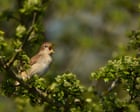
T he dawn chorus at RSPB Northward Hill in Kent is a riot of sound: the melodic robin, the two-tone cuckoo, the whitethroat’s scratchy warble. …
T he dawn chorus at RSPB Northward Hill in Kent is a riot of sound: the melodic robin, the two-tone cuckoo, the whitethroat’s scratchy warble. Even the garbling geese and mooing cows from the neighbouring Thames marshes add to the symphony. Dawn chorus Dawn chorus Sorry your browser does not support audio - but you can download here and listen $https://uploads.guim.co.uk/2026/04/29/Dawn_chorus.m4a RSPB Northward Hill in Kent. What was arable land as recently as the 1990s has been converted, through planting and natural regeneration, into a mix of woodland and scrub. Photograph: Jill Mead/The Guardian But in late April one energetic singer hogs the limelight. For a few weeks after arriving from West Africa, the nightingale spends the night – and early morning – in complex song. As it searches for a mate and marks its territory, its song is at times as sweet and tuneful as a soul singer, at others as frantic as a car alarm. Nightingales are perhaps the most celebrated of Britain’s woodland birds, beloved by artists and poets, and appearing on the BBC’s first wildlife broadcast in 1924. But populations have tumbled 90% since the 1970s, with the bird’s range contracting to the south and east of England. Several factors have contributed. Nightingales favour dense thicket and scrub, habitat that has suffered degradation from the likes of a decrease in coppicing and a rise in deer populations. …
Original source: The Guardian World