Help scientists find spacetime warps in these Euclid Space Telescope images
Space.com ·
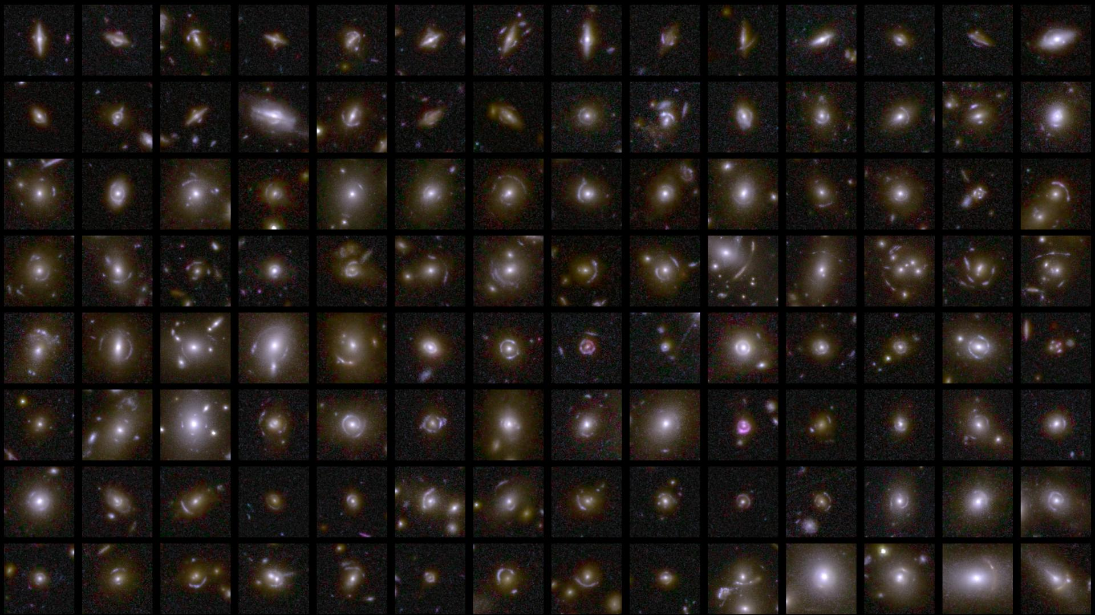
A new citizen science project invites the public to scan never-before-seen images from the Euclid Space Telescope in search of galaxies bending spacetime. …
A new citizen science project invites the public to scan never-before-seen images from the Euclid Space Telescope in search of galaxies bending spacetime. Led by the European Space Agency (ESA), the initiative, called Space Warps , uses data from Euclid to crowdsource the search for rare cosmic distortions known as gravitational lenses . These occur when massive foreground objects such as galaxies or galaxy clusters warp spacetime, bending and magnifying the light from more distant background objects. As Euclid continues its survey, sending around 100 GB of data to Earth each day, citizen scientists are being asked to help identify strong gravitational lenses in the dataset, according to a statement from the space agency. "We can't wait to see what we will find within this unprecedented dataset," Aprajita Verma, Space Warps' co-founder and project lead at the University of Oxford, UK, said in the statement . "Join us on Space Warps to take part in this exciting search!" Gravitational lensing can produce striking visual signatures: stretched arcs of light, duplicated galaxy images or near-perfect rings known as Einstein rings. Beyond their visual appeal, these "space warps" are powerful scientific tools. By magnifying extremely distant galaxies, gravitational lenses allow astronomers to study objects that would otherwise be too faint to detect, while also offering clues about the distribution of dark matter throughout the universe. …
Original source: Space.com
Mentioned
Earth · AI · UK · University of Oxford · European Space Agency