Cephalopods deserve higher welfare standards in research
Nature News ·
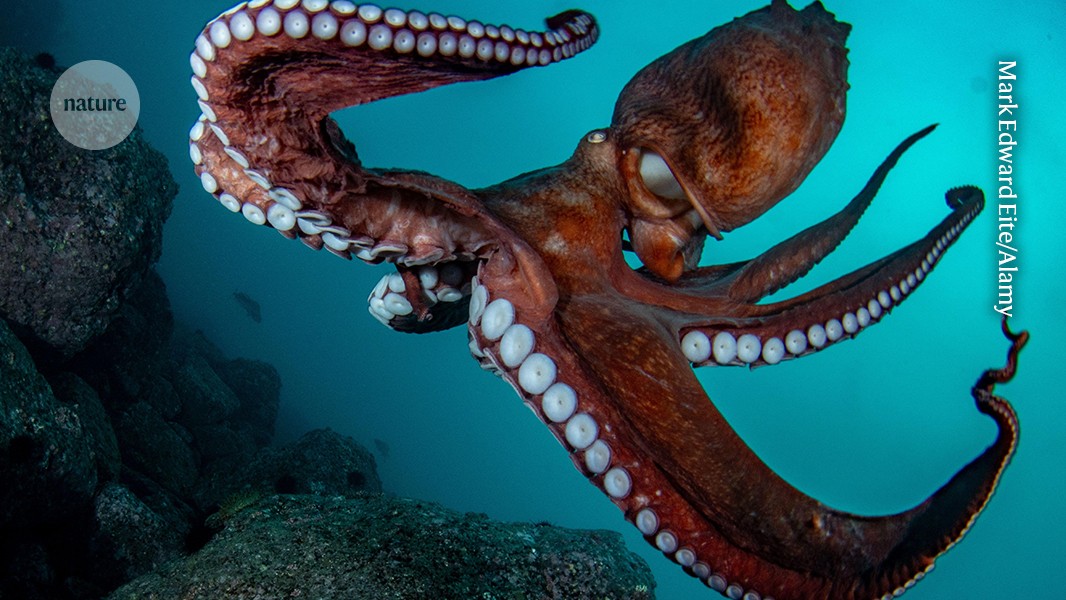
You have full access to this article via your institution. Cephalopods such as octopuses are known to feel pain, but there is a lack of suitable analgesics for use in these animals. …
You have full access to this article via your institution. Cephalopods such as octopuses are known to feel pain, but there is a lack of suitable analgesics for use in these animals. Credit: Mark Edward Eite/Alamy Cephalopod neuroscience is booming. Octopuses, cuttlefish and squid have uniquely large, complex brains among invertebrates. As a News Feature reports , more neuroscientists are asking how these brains are responsible for cephalopods’ sophisticated cognitive abilities and complex behaviours. In doing so, they are applying current techniques from mammalian neuroscience. For example, they record neuronal activity in awake animals by surgically implanting electrodes or imaging devices in the brain, as well as physically restraining animals during recording sessions. Do octopus brains work like humans’ — or is there another way to be smart? The use of animals in research must comply with laws and regulations, which vary from country to country. In many nations, non-human vertebrates — mice and zebrafish, for example — are legally entitled to appropriate anaesthesia and pain relief when used in research. Their overall care, including the quality of accommodation, is also regulated in many of those countries. By contrast, such laws have historically not applied to invertebrates, which is now actively being discussed among researchers 1 . Moves are also under way to gather support to establish a United Nations Convention on Animal Health and Protection. …
Original source: Nature News
Mentioned
Octopus · European Union · United States · Australia · United Kingdom · Canada · Switzerland · New Zealand