Will rates go higher in Europe this week? Central banks confront stagflation threat
CNBC Top News ·
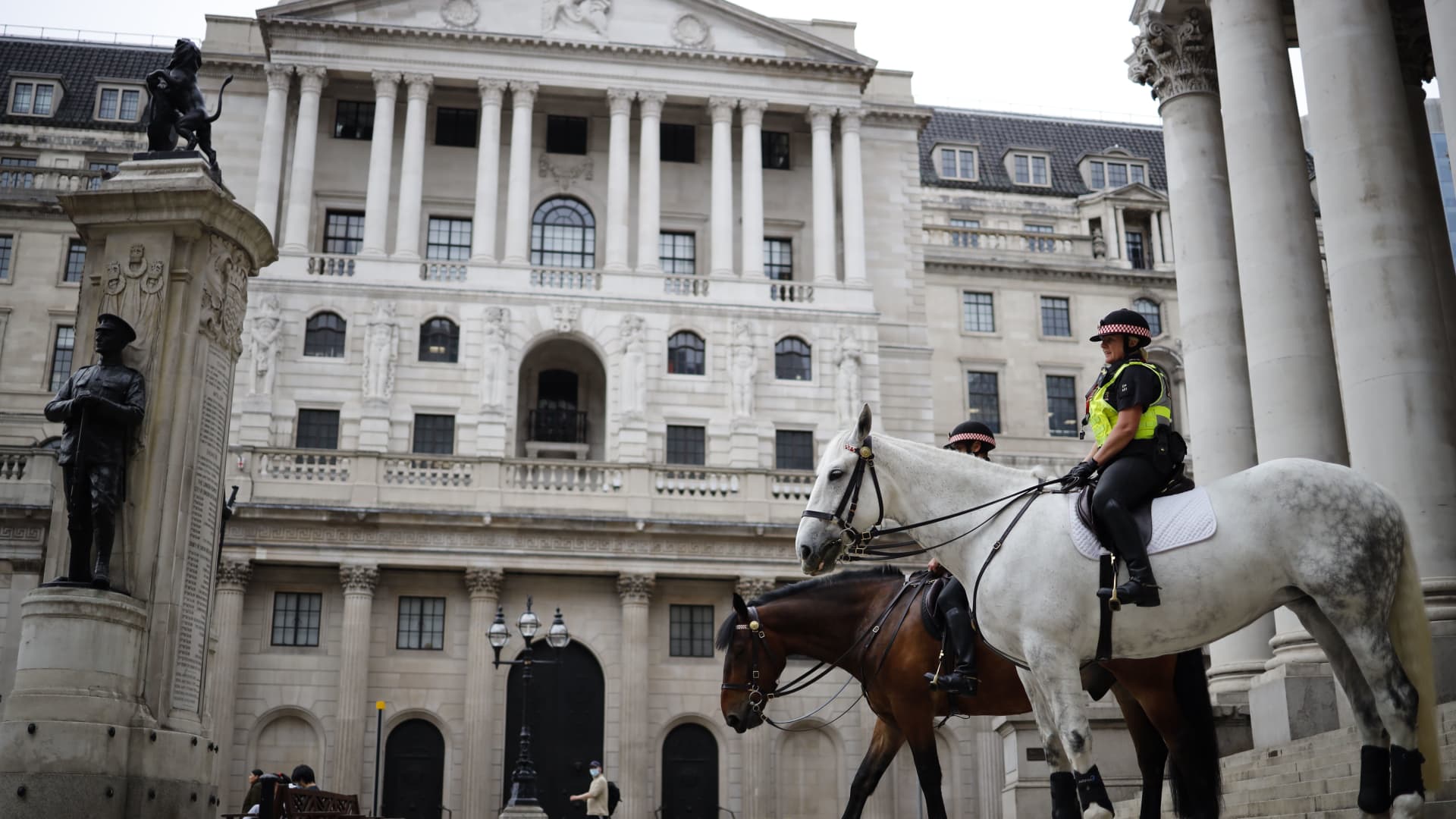
Mounted police officers sit in outside the Royal Exchange and the Bank of England in London on June 17, 2020. TOLGA AKMEN | AFP via Europe's central banks are in focus this week as the European …
Mounted police officers sit in outside the Royal Exchange and the Bank of England in London on June 17, 2020. TOLGA AKMEN | AFP via Europe's central banks are in focus this week as the European Central Bank and Bank of England release their latest monetary policy decisions against a backdrop of rising prices and growth fears. March data from the euro zone and the U.K. shows the Iran conflict is already weighing on economies, sparking fears of looming "stagflation" — slow growth, high inflation and rising unemployment. Both the ECB and BOE kept rates on hold in March as the war started to shake the global economy, and both are expected to take a cautious approach on Thursday. Markets quickly started pricing in interest rate hikes by both central banks in response to the outbreak of the Iran conflict, but economists now think policymakers will look through the "noise" around inflation spikes and keep rates on hold for longer at 2% for the ECB and 3.75% for the BOE. The decisions come as inflation in the euro zone stands at 2.5%, and at 3.3% in the U.K , above the banks' respective 2% targets. "Energy prices aren't far enough above the ECB's forecast assumptions, while negotiation attempts between the U.S. and Iran sustain the bias towards assuming a short conflict," Oxford Economics' Chief Germany Economist Oliver Rakau told CNBC in emailed comments. "Surveys also suggest a more front-loaded economic hit than in 2022, dampening worries about second-round effects," he said. …
Original source: CNBC Top News