NASA Connects Little Red Dots with Chandra, Webb
NASA Breaking News ·
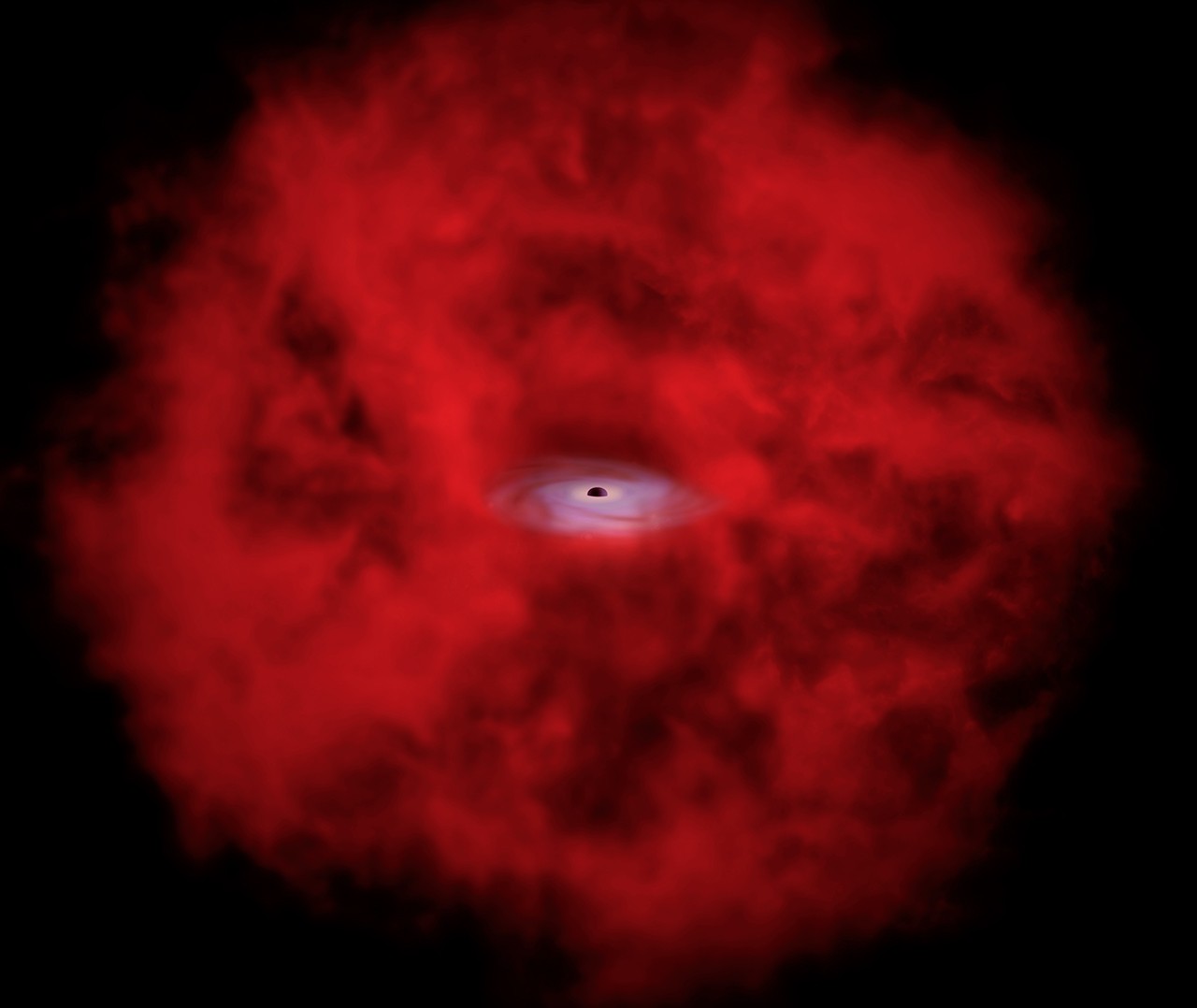
A newly discovered object may be a key to unlocking the true nature of a mysterious class of sources that astronomers have found in the early universe in recent years. …
A newly discovered object may be a key to unlocking the true nature of a mysterious class of sources that astronomers have found in the early universe in recent years. A “X-ray dot” found by NASA’s Chandra X-ray Observatory could explain what the hundreds or potentially thousands of these objects are. A paper describing the results published in The Astrophysical Journal Letters. Shortly after NASA’s James Webb Space Telescope started its science observations, reports of a new class of mysterious objects emerged. Astronomers found small, red objects about 12 billion light-years from Earth or farther, which became known as “little red dots” (LRDs). Many scientists think LRDs are supermassive black holes embedded in clouds of dense gas, which mask some of the typical signatures in different kinds of light – including X-rays – that astronomers usually use to identify them. This would make them different from typical growing supermassive black holes, which are not embedded in dense gas, allowing bright ultraviolet light and X-rays from material orbiting the black holes to escape. Because of this and their potential similarities to stellar atmospheres, astronomers have called this the “black hole star” scenario for LRDs. This new “X-ray dot” (officially known as 3DHST-AEGIS-12014), which is located about 11.8 billion light-years from Earth, may provide a crucial bridge between black hole stars and typical growing supermassive black holes. …
Original source: NASA Breaking News
Mentioned
New Jersey · Massachusetts · Princeton University · Center for Astrophysics