Starbirth shuts down 40,000 light-years from the Milky Way's core — and astronomers don't know why
Space.com ·
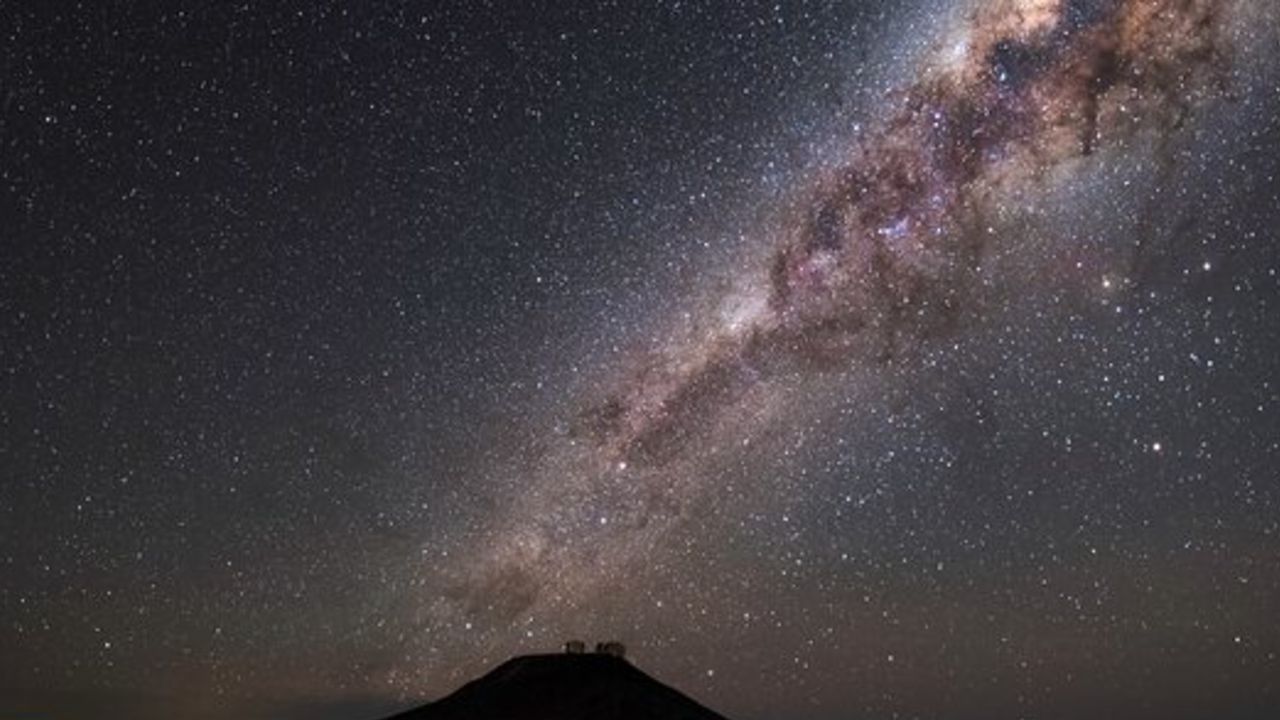
Astronomers have found the boundary of star formation in the Milky Way's spiral disk — and it's not as far out from the center of our galaxy as you might imagine. …
Astronomers have found the boundary of star formation in the Milky Way's spiral disk — and it's not as far out from the center of our galaxy as you might imagine. The Milky Way is at least 100,000 light-years across, but the new results suggest that the galaxy's star formation takes place within a region that extends to a radius of 40,000 light-years from the galactic center. "The extent of the Milky Way's star-forming disk has long been an open question in galactic archaeology," said the study's lead author, Karl Fiteni of the University of Insubria in Italy, in a statement . "By mapping how stellar ages change across the disk, we now have a clear, quantitative answer." (Image credit: ESA/Gaia/DPAC/S. Payne-Wardenaar) Fiteni's international team focused on 100,000 luminous giant stars spread across the Milky Way's spiral disk, obtaining spectroscopic data describing their temperatures and ages from the LAMOST (Large Sky Area Multi-Object Fiber Spectroscopic Telescope) telescope in China and the Apache Point Observatory Galactic Evolution Experiment (APOGEE) at the Sloan Digital Sky Survey in the United States, plus additional data from the European Space Agency's Gaia mission. "Gaia is delivering on its promise: by combining its data with ground-based spectroscopy and galaxy simulations, it allows us to decipher the formation history of our galaxy," said Laurent Eyer of the University of Geneva. …
Original source: Space.com