Scientists learn how much baby stars in Orion weigh — by watching their dance moves
Space.com ·
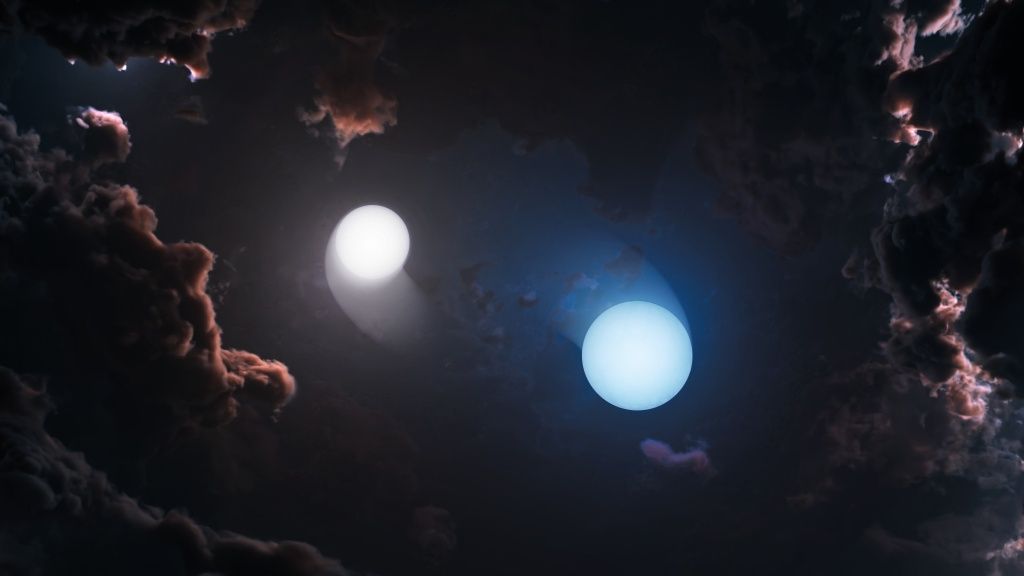
By peering through thick veils of gas and dust, radio astronomers have been able to watch young binary stars orbit around one another in the heart of star-forming clouds — and, in the process, have …
By peering through thick veils of gas and dust, radio astronomers have been able to watch young binary stars orbit around one another in the heart of star-forming clouds — and, in the process, have revealed the stars' masses. Stars are born in vast clouds of molecular hydrogen gas laced with heavy elements. When one of these clouds fragments into parts, gravity causes pockets within the fragments to collapse, with the density and temperature at the core of each pocket rising. This births a star that continually accretes more gas and becomes more massive. But what exactly happens to these baby stars next isn't always clear (literally) because they are buried deep within clouds of dark, dusty gas that obscure them. This makes it difficult to observe stars at young ages of perhaps just a few hundred thousand to a million or so years old. That has been a persistent problem for astronomers seeking to understand how young stars grow and evolve as well as what controls how massive stars become before they switch on, blow away the surrounding gas and stop growing. A star's mass is perhaps the most crucial property that a star has. Its future evolution depends on its mass, which controls its luminosity, temperature and even overall lifetime. …
Original source: Space.com