‘World models’ are AI’s latest sensation: what are they and what can they do?
Nature News ·
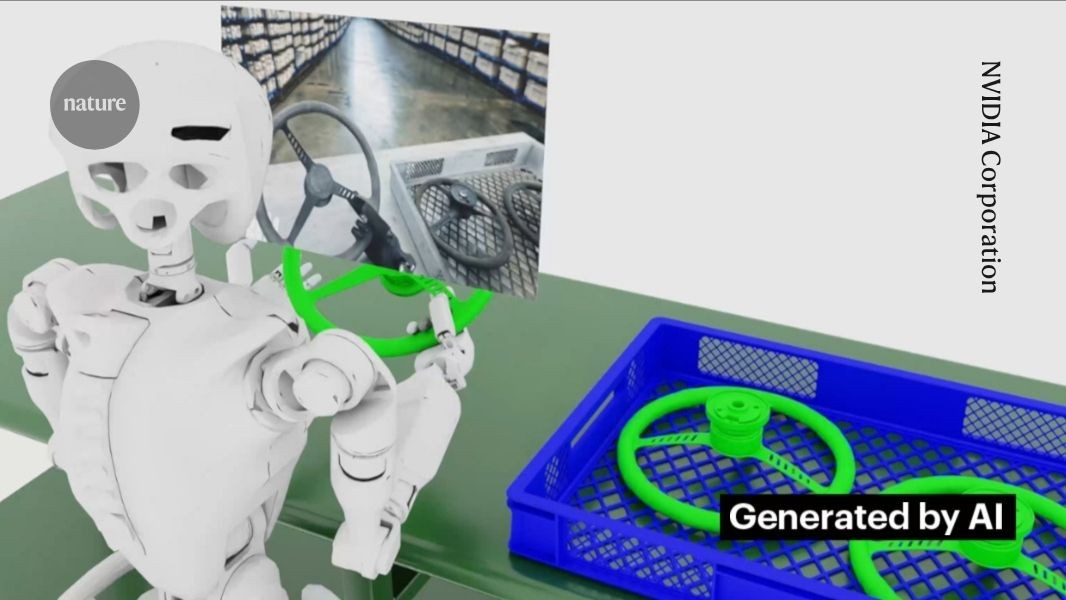
World models, like Nvidia's Cosmos, trained on physics data could help build better AI-controlled robots. Credit: NVIDIA Corporation An ongoing trend in artificial intelligence (AI) could have huge …
World models, like Nvidia's Cosmos, trained on physics data could help build better AI-controlled robots. Credit: NVIDIA Corporation An ongoing trend in artificial intelligence (AI) could have huge implications for how the technology is used in research. Machine-learning systems such as large language models (LLMs), which turn prompts into text, images and video, are becoming increasingly sophisticated and continue to make astonishing progress, including in science . But such ‘generative AI’ tools also have limitations . The approach does not always make accurate predictions about the physical world, and could fail at modelling correctly what would happen if a car were to go off the edge of a cliff, for example. This would have implications for developing effective and safe AI-powered robots and self-driving vehicles . Some researchers, including the computer scientist and AI pioneer Yann LeCun, who founded the firm Advanced Machine Intelligence (AMI) Labs in Paris, have turned their attention to a different type of AI tool, developing systems known as ‘world models’ that are trained on real-world data and can embody virtual, interactive and 3D environments. The approach is attracting huge investment and business interest. AMI Labs — which is taking a radical approach to world models — has raised more than US$1 billion, a record initial infusion of money for a European company. …
Original source: Nature News
Mentioned
Nvidia · Google DeepMind · Paris · Canada · Vancouver · New York City