The security apparatus at the "Hinckley" Hilton where correspondents' dinner is held
CBS News Top ·
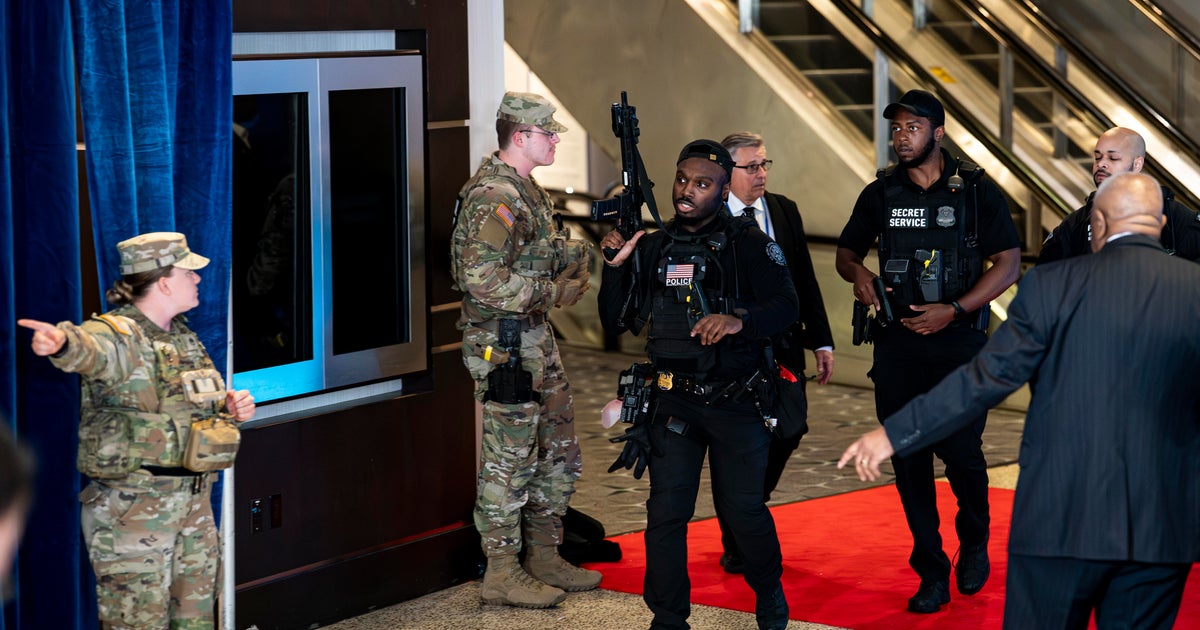
Timothy Reboulet never calls it the Washington Hilton. Nobody in his former line of work ever does. "Within the agency," the former Secret Service agent says, "we refer to it as the 'Hinckley' …
Timothy Reboulet never calls it the Washington Hilton. Nobody in his former line of work ever does. "Within the agency," the former Secret Service agent says, "we refer to it as the 'Hinckley' Hilton." That's because on March 30, 1981 — just steps outside the hotel — John Hinckley Jr. opened fire on then-President Ronald Reagan, wounding the commander in chief, U.S. Secret Service agent Tim McCarthy, D.C. police officer Thomas Delahanty and White House press secretary James Brady. File: Chaos surrounds shooting victims immediately after the assassination attempt on President Reagan, March 30, 1981, by John Hinkley Jr. outside the Hilton Hotel in Washington, DC. Dirck Halstead / Liaison / Since that day, for the U.S. Secret Service, the building has never been just another venue. Reboulet knows it the way most agents know it — not as a ballroom, but as a system. Doors, choke points, stairwells, loading docks, motorcade routes, post assignments, "clean" spaces — those that are completely secure and have passed through magnetometers — and "dirty" spaces — unsecured areas where people and their possessions have not been screened. The bright red line between them is defined statutorily in 18 USC 1752 . Reboulet has walked the hotel's hallways hundreds of times. He can rattle off the 46 breakout rooms. …
Original source: CBS News Top