Astrobotic fires next-generation 'rotating detonation rocket engine' in record-breaking test (video)
Space.com ·
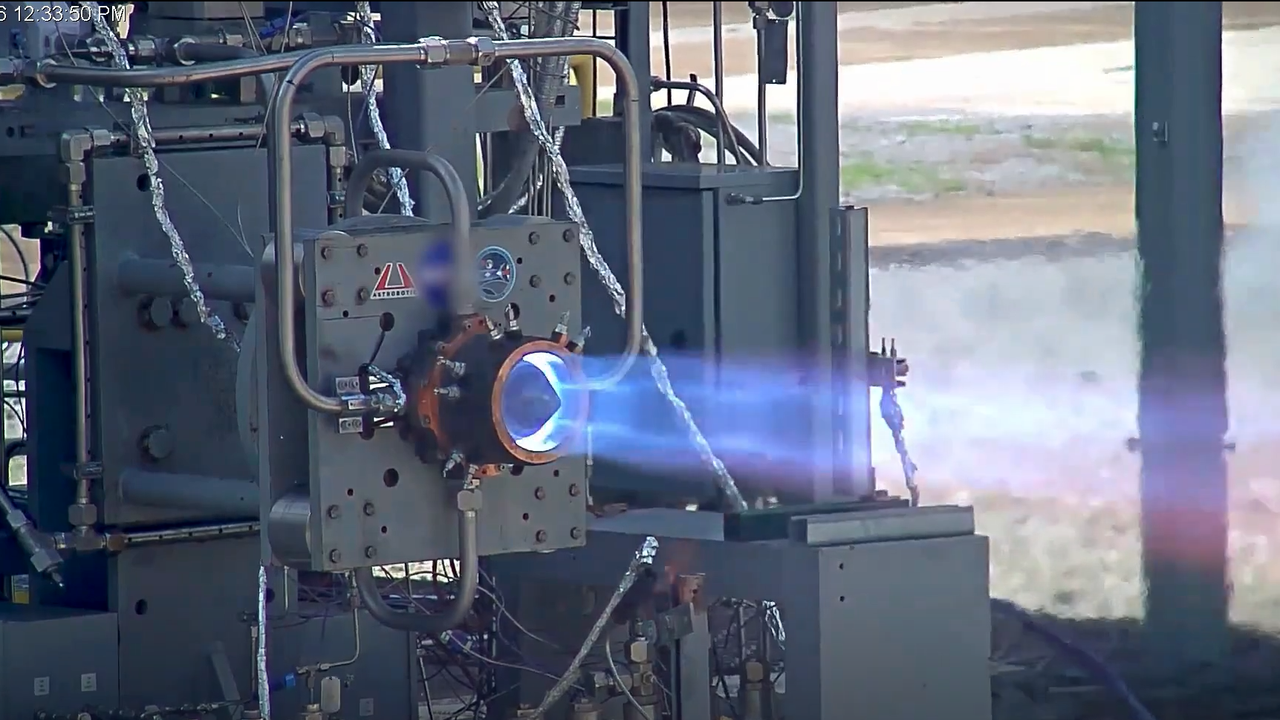
Pittsburgh-based Astrobotic has completed a successful series of hot-fire tests of its rotating detonation rocket engine prototype Chakram, marking a key milestone toward bringing the experimental …
Pittsburgh-based Astrobotic has completed a successful series of hot-fire tests of its rotating detonation rocket engine prototype Chakram, marking a key milestone toward bringing the experimental propulsion technology to flight readiness. Rotating detonation rocket engines (RDREs) work differently from conventional designs. Typical rocket engines rely on a steady, controlled process of chemical propellant ignition inside a combustion chamber. RDREs use a continuous, circular detonation wave that travels around a ring-shaped chamber, which produces higher pressure and efficiency and results in increased thrust with less fuel. In theory, that can improve efficiency by around 10–15%, while also reducing engine size and weight — advantages that are especially important for spacecraft, where every ounce of weight needs to be accounted for. But the benefits have been difficult to realize in practice. Astrobotic, however, thinks the tests of its new RDRE prototype could help finally bring this type of propulsion into deep space, including around the moon . “Chakram more than exceeded our expectations,“ said Bryant Avalos, Astrobotic’s Principal Investigator for Chakram. Astrobotic completed the hot fire test campaign for its Chakram RDRE at NASA's Marshall Space Flight Center. …
Original source: Space.com
Mentioned
Moon · Alabama · United States · Huntsville · Astrobotic