AI sped up James Webb Space Telescope data analysis from years to days. What can it do for the groundbreaking Rubin Observatory?
Space.com ·
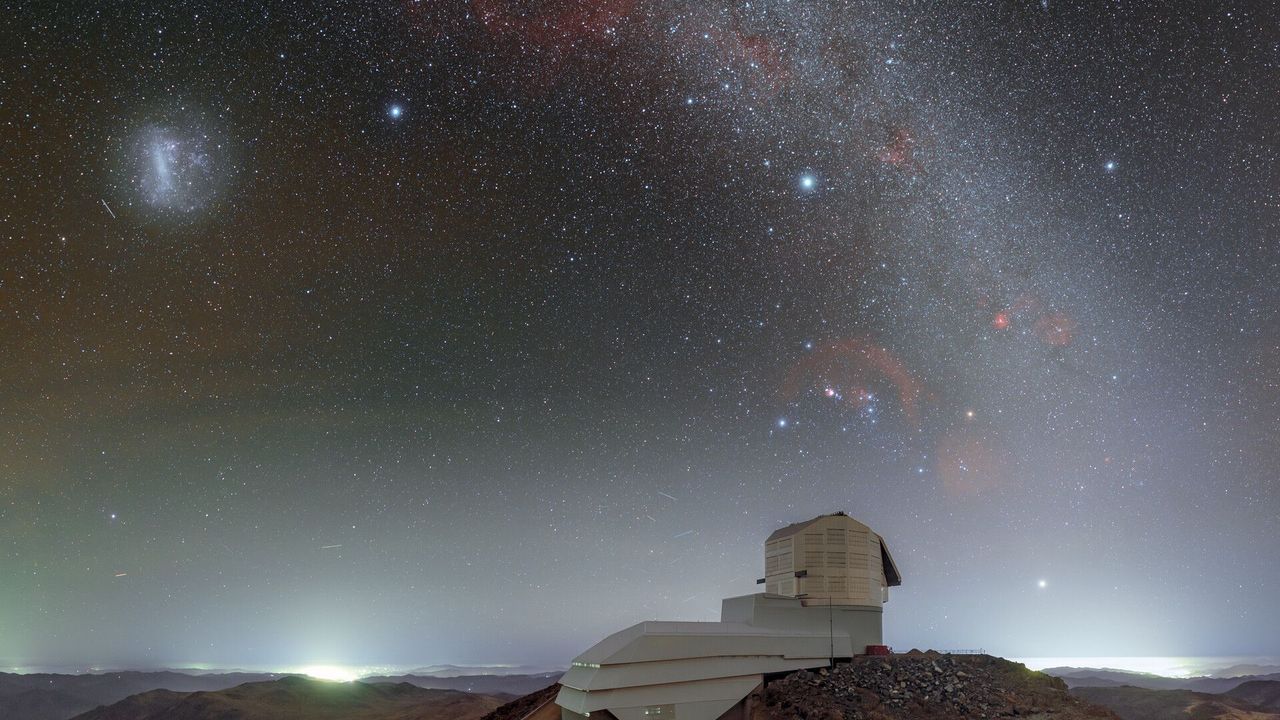
AI image processing has sped up analysis of data from NASA's James Webb Space Telescope from years to mere days or less, ushering in an avalanche of ground-breaking discoveries that may otherwise …
AI image processing has sped up analysis of data from NASA's James Webb Space Telescope from years to mere days or less, ushering in an avalanche of ground-breaking discoveries that may otherwise never have been made. And now, the technology will be used to enhance the quality of images taken by the Chile-based Vera C. Rubin Observatory , the newest astronomy power house, to make them appear as sharp as if they have been taken from space. The Vera C. Rubin Observatory, named after the American astronomer who discovered one of the key pieces of evidence for the existence of dark matter , sits atop the 8,770-feet (2,673 meters ) Cerro Pachón in the Chilean Andes. The telescope began operations last year . It scans the entire sky every three nights, aiming to create a 10-year timelapse of the motions of objects in the sky. Its position in Chile's Atacama Desert, the most parched region on the planet, allows the observatory to benefit from a dry atmosphere and a year-round clear sky. Still, Rubin's observations suffer from significant distortions, as light from distant celestial objects must pass through Earth's atmosphere before it hits the telescope's detectors. A new AI algorithm developed by researchers from the University of California, Santa Cruz (UCSC) will now attempt to remove this distortion and increase the resolution of the images to make them look as if they have been taken from space. …
Original source: Space.com
Mentioned
James Webb Space Telescope · Hubble Space Telescope · Nvidia · University of California