Daily briefing: The heart’s pumping motion seems to keep cancer at bay
Nature News ·
You have full access to this article via your institution. Hello Nature readers, would you like to get this Briefing in your inbox free every day? Sign up here . …
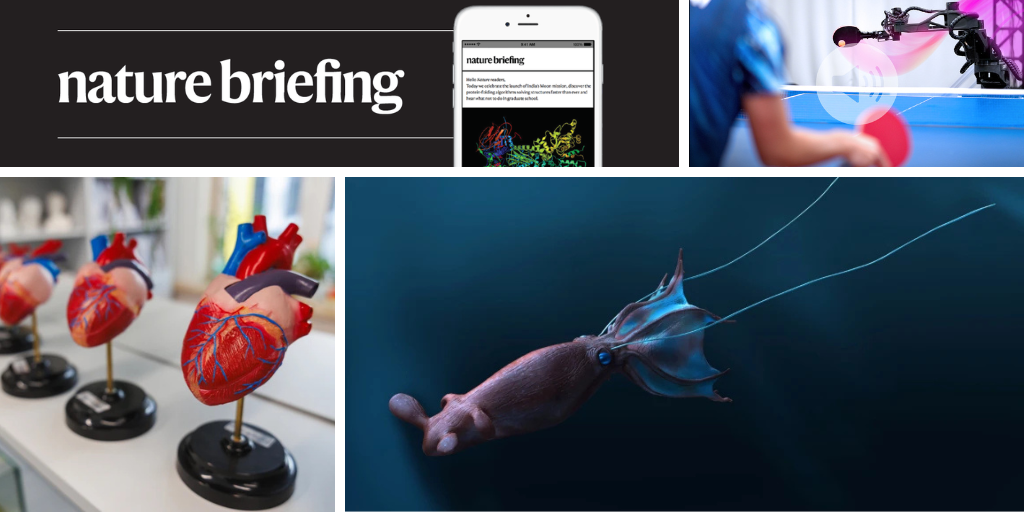
You have full access to this article via your institution. Hello Nature readers, would you like to get this Briefing in your inbox free every day? Sign up here . Artist’s impression of an extinct Nanaimoteuthis species, often called krakens, which could have rivalled large marine reptiles in terms of size. Credit: Masato Hattori/Science Photo Library In the age of dinosaurs, giant octopuses — sometimes named krakens after the mythological monsters — might have grown to nearly 19 metres in length. The estimate is based on fossilized jaws, which researchers say show patterns of wear that came from devouring animals that had hard shells and skeletons. The team suggest that these giant cephalopods might have sat at the top of the marine food chain in the Cretaceous period alongside huge marine reptiles such as mosasaurs. But other researchers say that estimates about the size of the soft-bodied creatures, and how they hunted, should be taken with a pinch of salt. Nature | 4 min read Reference: Science paper In mice, the mechanical action of the heart beating stops tumours from growing — which could explain why heart cancers are so rare in all mammals . Researchers compared a non-beating heart that had been transplanted onto the necks of mice with the ‘native’ hearts in the animals. After being injected with cancer cells, the external hearts were swiftly taken over by the disease, while the beating hearts stayed much closer to cancer-free. …
Original source: Nature News
Mentioned
Cas · China · PhD · Alibaba · Harvard University