These 'interstellar glaciers' could give water to young star systems. Could they support alien life, too?
Space.com ·
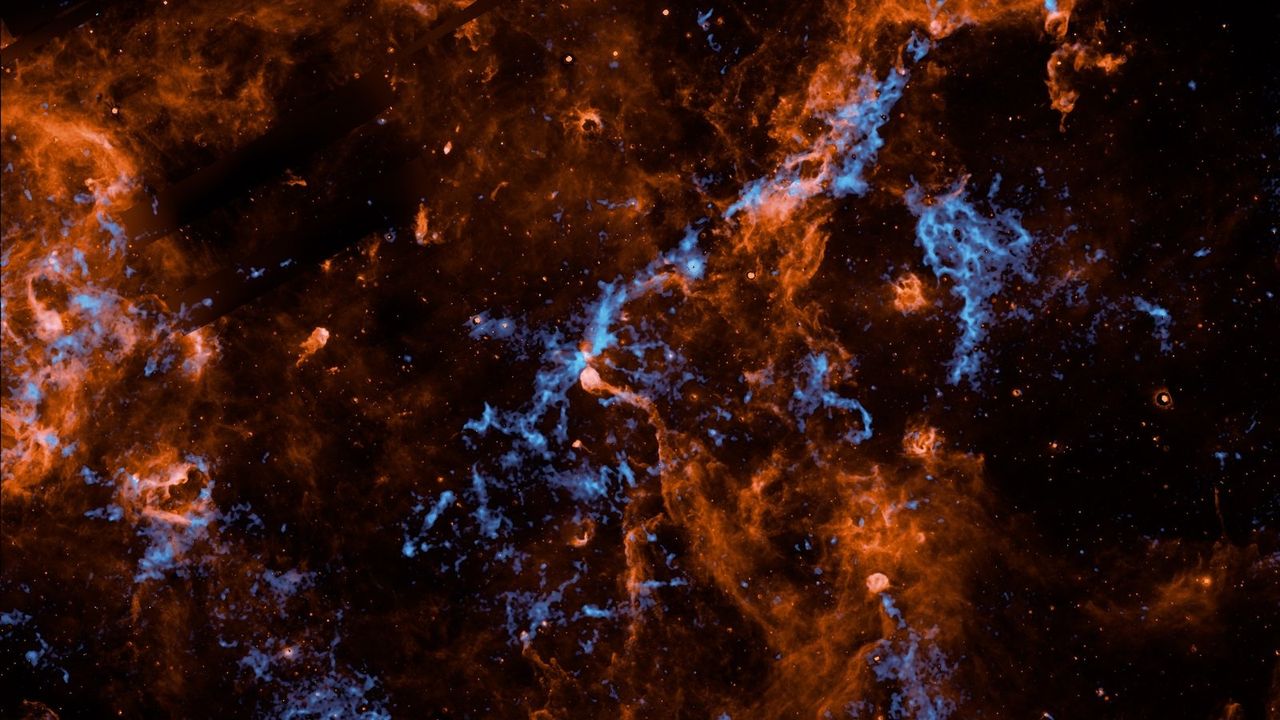
A striking new image from NASA's newest space telescope reveals vast reservoirs of water ice stretching across one of the Milky Way's most chaotic stellar nurseries, offering a glimpse into where …
A striking new image from NASA's newest space telescope reveals vast reservoirs of water ice stretching across one of the Milky Way's most chaotic stellar nurseries, offering a glimpse into where much of the universe's water — including that found in Earth's oceans — may originate and be stored. The observations, captured by SPHEREx , map icy material across the turbulent Cygnus X region , a massive star-forming complex filled with dense clouds of gas and dust where new stars are rapidly emerging. The snapshot, based on data collected in 2025 and released this week, highlights water ice in bright blue alongside intertwining dark dust lanes that weave through the region, dotted with pinpricks of light from newborn stars . The findings show that these ice reservoirs are composed of molecules such as water, carbon dioxide and carbon monoxide, marking key ingredients in the chemistry that can ultimately lead to life as we know it. Scientists think these ices, frozen onto the surfaces of tiny dust grains, represent a major source of the universe's water. Furthermore, the same processes that form and preserve the reservoirs are thought to seed planetary systems. This means the water in Earth 's oceans and ices found on comets and other planetary bodies likely originated in such regions. …
Original source: Space.com
Mentioned
Center for Astrophysics · Earth · NASA · Massachusetts · Astrophysical Journal · California Institute of Technology