What will happen when our sun starts dying? These 'stellar archaeologists' may have found a clue
Space.com ·
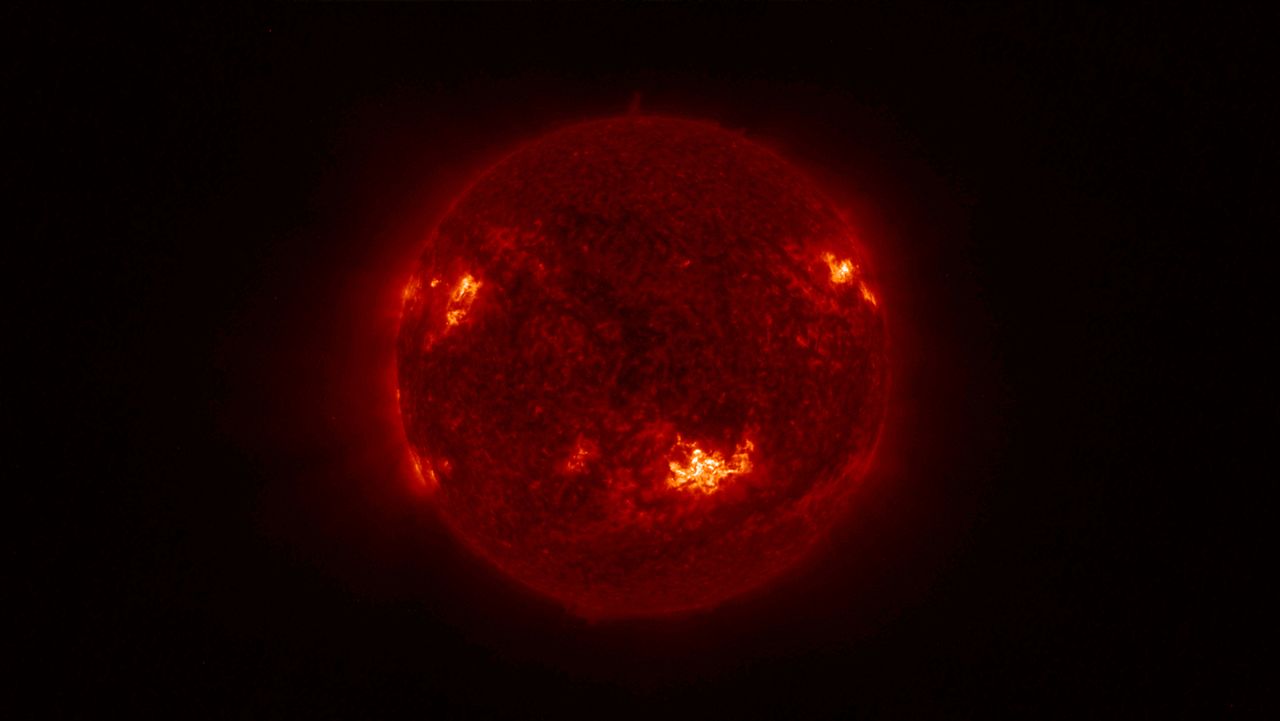
Acting as stellar archaeologists, scientists have found fossilized magnetism on long-dead stars known as "white dwarfs." This discovery may help explain how stars evolve from their "puffed out" red …
Acting as stellar archaeologists, scientists have found fossilized magnetism on long-dead stars known as "white dwarfs." This discovery may help explain how stars evolve from their "puffed out" red giant phase to their compact and smoldering white dwarf phase, a process our sun will undergo in around 5 billion years. The team behind this research linked a theoretical model to observations of stars at different stages of their evolution, connecting evidence of magnetic fields at the surfaces of white dwarfs to magnetism detected at the cores of red giants. The team's model hinges on the idea that magnetic fields, which form early in a star's life, persist throughout all of their later stages, finally emerging on white dwarfs billions of years later as "fossil fields." With this information in hand, the researchers then used measurements of stellar oscillations, or simply "starquakes," by tapping into techniques in the field of asteroseismology. This allowed them to further develop the fossil field theory as an explanation for stellar magnetism. "The magnetic field in a star is important for how the star works on the inside and how long it lives and evolves," team co-leader Lukas Einramhof of the Institute of Science and Technology Austria (ISTA) said in a statement . …
Original source: Space.com