Why do some starburst galaxies mysteriously shut down? New study provides clues
Space.com ·
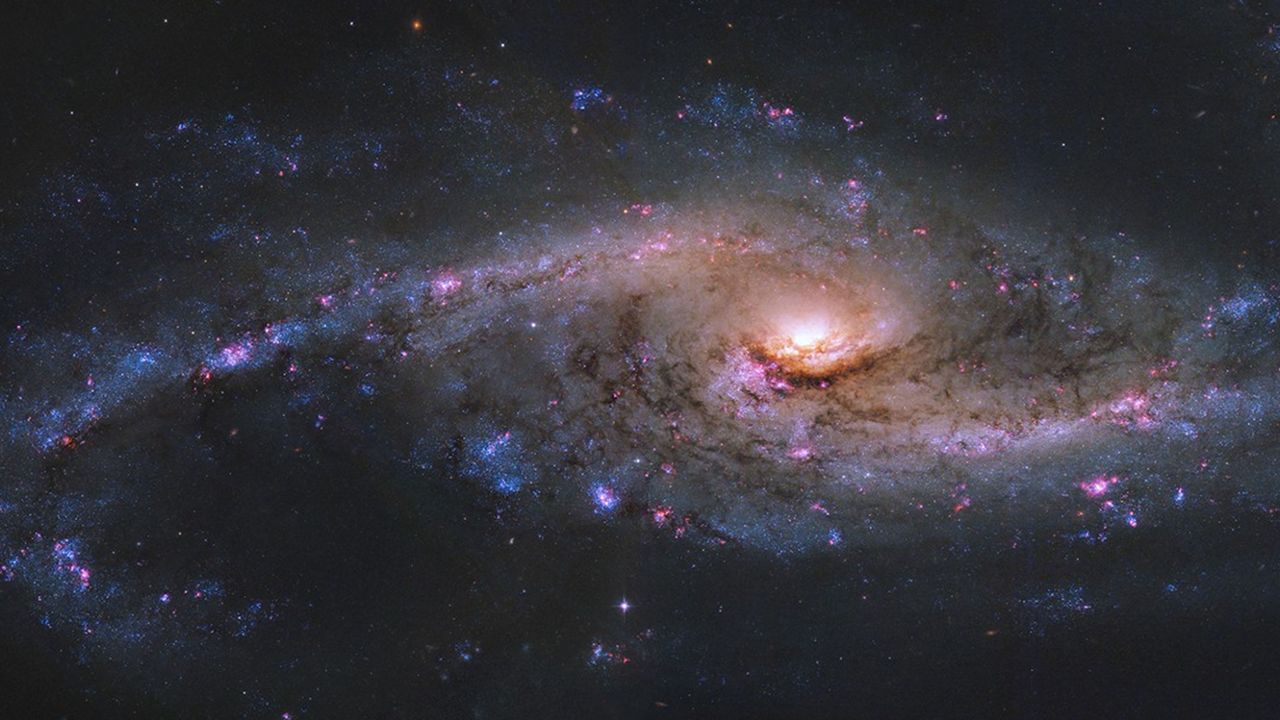
A galaxy dying is not a gentle thing. Its star-making factories, once churning out millions of suns, grind to a halt. Rather than a slow fade, it's a sudden, striking shutdown, a phenomenon …
A galaxy dying is not a gentle thing. Its star-making factories, once churning out millions of suns, grind to a halt. Rather than a slow fade, it's a sudden, striking shutdown, a phenomenon astronomers call rapid quenching. Such phenomena are the mysteries of what we call post-starburst galaxies , which present some of the most compelling, yet often overlooked, stories unfolding across the universe . For astronomers, such systems are like cosmic crime scenes. They recently had a massive burst of star formation — a party of epic proportions — but now show almost no new stars being born. It's like finding a ballroom where the music just stopped, the lights went out, and everyone left in a hurry. The scene leaves us wondering about the sudden emptiness. And about the astonishing speed of their exit. Here's the rub: post-starburst galaxies are pretty rare. They make up less than 1% of all galaxies out there. This rarity makes them tricky to study. Early on, astronomers looked at optical light, specifically strong absorption lines from hot, young A-type stars, combined with a distinct lack of emission lines that signal active star formation. But these methods, developed years ago, sometimes missed a whole bunch of post-starbursts, meaning our picture was incomplete. To truly understand what happens when a galaxy suddenly stops forming stars, we need to know what fuels star formation in the first place: gas. Cold gas, to be precise. …
Original source: Space.com
Mentioned
Telescope · China · University of Victoria · University of St. Andrews