What elite sport prepared me for in the lab — and what it didn’t
Nature News ·
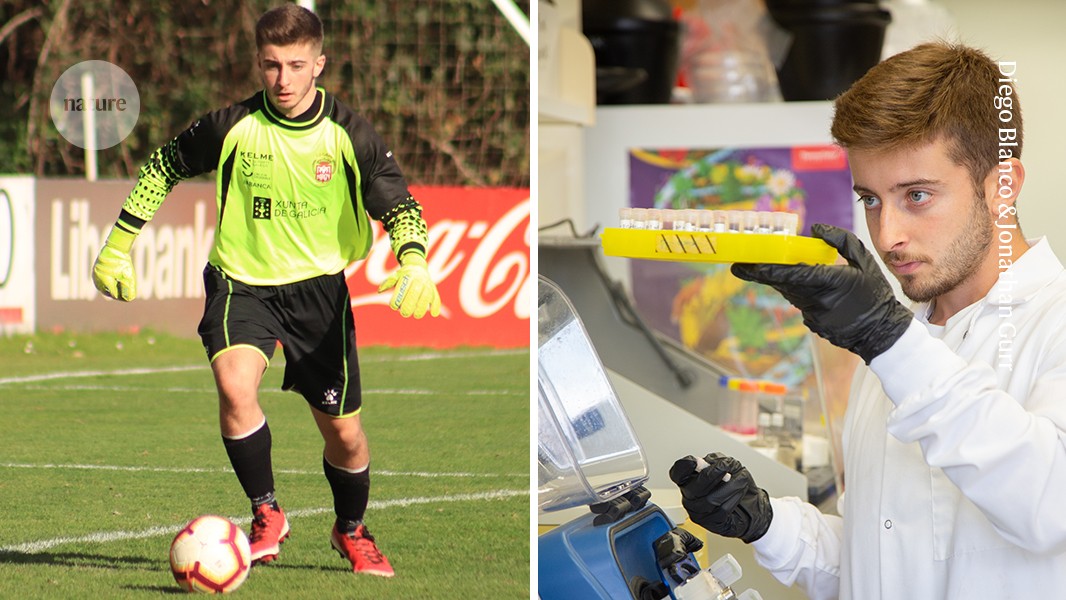
Javier Nion Fieira found that his experiences in elite sport were easier to analyse and process than those in the laboratory. Credit: Diego Blanco & Jonathan Gurr At 2 a.m. …
Javier Nion Fieira found that his experiences in elite sport were easier to analyse and process than those in the laboratory. Credit: Diego Blanco & Jonathan Gurr At 2 a.m. on a frosty February morning, I started what I hoped would be the first big experiment of my PhD-dissertation project: collecting eight lung samples from mice and preparing them for flow cytometry. I’d spent months practising the workflow — washing, then tissue processing, staining and finally analysis — rehearsing it until it felt automatic. By the time I got home at 8.30 p.m., I felt dizzy from my long day of sustained focus. I hadn’t even stopped to eat. Still, I went to sleep convinced that the effort would translate into clean data to provide the clear phenotype we had been looking for. It would drive my project forwards and ensure that I would graduate on time with a PhD from Louisiana State University Health Sciences Center in Shreveport. We need to talk about failure in science That’s not what happened. I finished too late for the flow-cytometry staff to process the samples that evening, so I took them to a specialist first thing the next morning and spent the rest of the day analysing the output. It looked rough: the sample quality wasn’t where it needed to be. A couple of the crucial antibodies that were supposed to anchor the analysis showed a weak signal and the labels that should have clearly marked key cell types barely showed up, so the groups blurred together on the plots. …
Original source: Nature News
Mentioned
Barcelona · English · Manchester City · Spain