A space history mystery: What happened to the Viking arm used 50 years ago?
Ars Technica ·
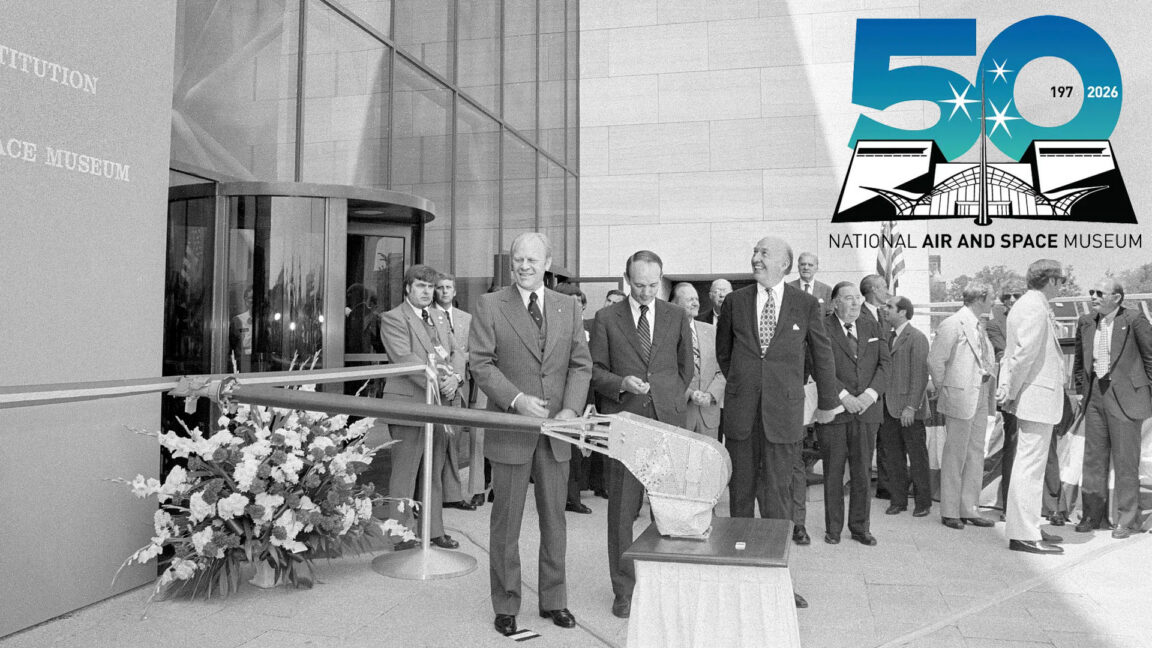
Part of the challenge was that the time of the opening kept changing. Originally, the museum was scheduled to open on July 4 as a birthday gift to the nation, but it was felt that it would compete …
Part of the challenge was that the time of the opening kept changing. Originally, the museum was scheduled to open on July 4 as a birthday gift to the nation, but it was felt that it would compete with other bicentennial celebrations, and besides, the museum was ready to open. Then there was the lander at Mars. Viking 1 was supposed to land on July 4, but when it arrived in its certification orbit two weeks earlier, imagery of the primary landing site showed its terrain was too rough to guarantee a safe landing. NASA delayed the landing to July 20 as a more suitable landing site was sought. So Collins was already dealing with date and time changes beyond his control. “But believe it or not, all of the electrons did their cute little things and the ribbon got snipped and the building got opened. It was good,” he said. The Viking proof test article, seen here in the Boeing Milestones of Flight Hall, was donated to the National Air and Space Museum in 1979 by NASA. Credit:
Smithsonian National Air and Space Museum The Viking proof test article, seen here in the Boeing Milestones of Flight Hall, was donated to the National Air and Space Museum in 1979 by NASA. Credit:
Smithsonian National Air and Space Museum The doors then opened, and the public got their first look at the Wright brothers’ 1903 Flyer, Charles Lindbergh’s Spirit of St. Louis, and NASA space capsules, including the command module Columbia that Collins flew to the moon in 1969. …
Original source: Ars Technica