July's planetary lineup is changing — and Venus is the last one standing
Space.com ·
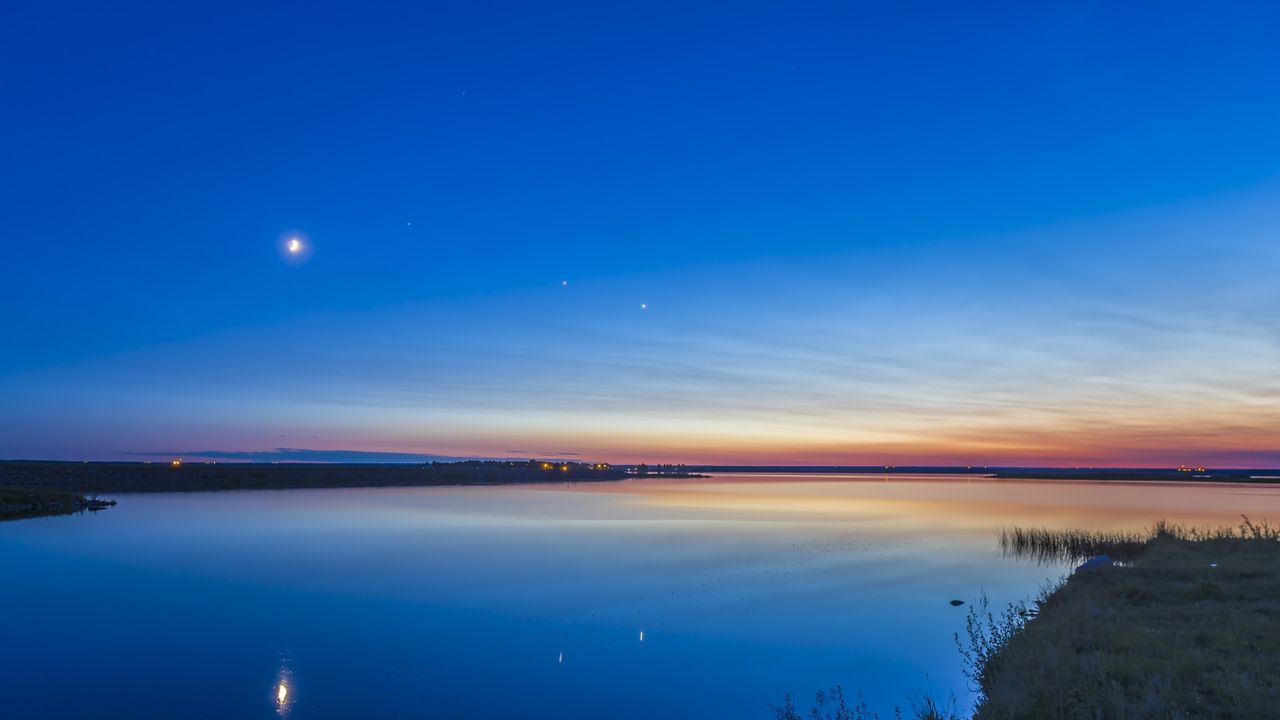
The three-planet evening show that graced June's twilight sky has now dwindled to one lone survivor. Mercury and Jupiter are now swinging behind the sun and are lost in the bright solar glare. …
The three-planet evening show that graced June's twilight sky has now dwindled to one lone survivor. Mercury and Jupiter are now swinging behind the sun and are lost in the bright solar glare. Only Venus remains evident after sunset, and even here the dazzling evening star itself is showing subtle signs of slowly dropping down into the sunset fires; it is getting noticeably lower in the western sky with each passing week. It will pass close to the brightest star in Leo the Lion , Regulus , during the second week of July. Saturn is in a fine position to be viewed just before the break of dawn in the east-southeast. The famous rings are now tilted some 9 degrees toward Earth, once again making this planet a showpiece for telescopic observation. Mars rises about 2.5 hours before sunrise but is ever-so-slowly becoming more conspicuous as it brightens while climbing a bit higher in the eastern sky. It will also serve as a benchmark to locate the much fainter planet Uranus early on the morning of July 4; this distant greenish world will then be positioned only about 7 arcminutes (less than one-quarter of the apparent width of the moon) above Mars. Certainly, if you have never seen Uranus before, this will be an excellent opportunity to sight it, either with a small telescope or binoculars, or even possibly with your unaided eyes. …
Original source: Space.com