NASA’s Webb Studies How Planet Survived Death of its Star
NASA Breaking News ·
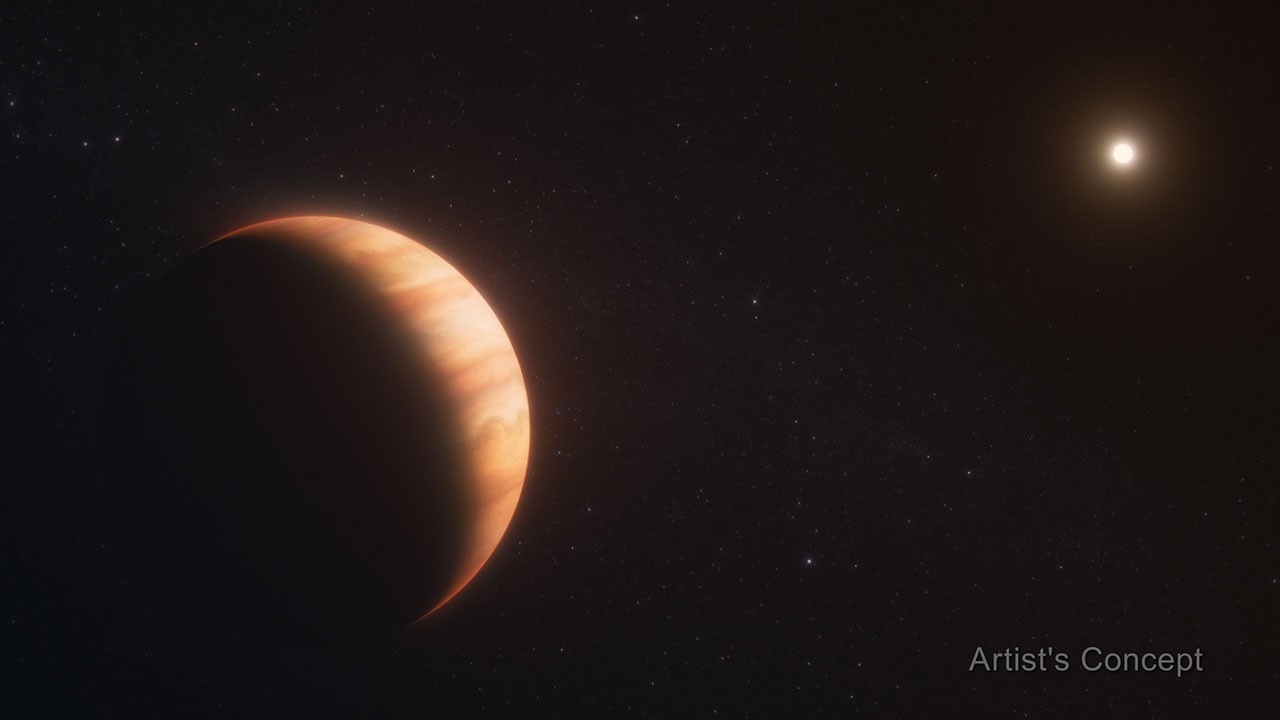
NASA’s James Webb Space Telescope is giving us new insight into the far-future of solar systems like our own, as the agency continues to reveal the secrets of the universe and our place in it. …
NASA’s James Webb Space Telescope is giving us new insight into the far-future of solar systems like our own, as the agency continues to reveal the secrets of the universe and our place in it. Billions of years ago, a Sun-like star nearing the end of its life swelled tremendously in size to become a red giant before ejecting its outer layers, leaving a hot, remnant core known as a white dwarf . As a red giant, the star should have engulfed and destroyed any nearby planets. Yet astronomers have found a Jupiter-sized exoplanet orbiting the white dwarf every 34 hours at a separation of less than 2 million miles (3 million kilometers). To solve the mystery of how this exoplanet survived, an international team of astronomers used NASA’s James Webb Space Telescope to watch the Jupiter-sized exoplanet WD 1856 b transit its host star, measuring the planet’s temperature and detecting molecules in its atmosphere. They found the planet is significantly warmer than expected and determined how it most likely reached its very tight orbit around the white dwarf star. The results are a window into the future of planets like Jupiter after the death of the Sun, billions of years into the future. The results published Wednesday in the journal Nature . WD 1856 b was discovered in 2020 by scientists using NASA’s TESS (Transiting Exoplanet Survey Satellite) and the retired Spitzer Space Telescope. It orbits the white dwarf WD 1856+534, which is located about 80 light-years from Earth. …
Original source: NASA Breaking News
Mentioned
NASA · Earth · Jupiter · Illinois · Fahrenheit · United Kingdom · Northwestern University · University of St. Andrews · James Webb Space Telescope