NASA’s TESS Mission Finds Planetary System in New Way
NASA Breaking News ·
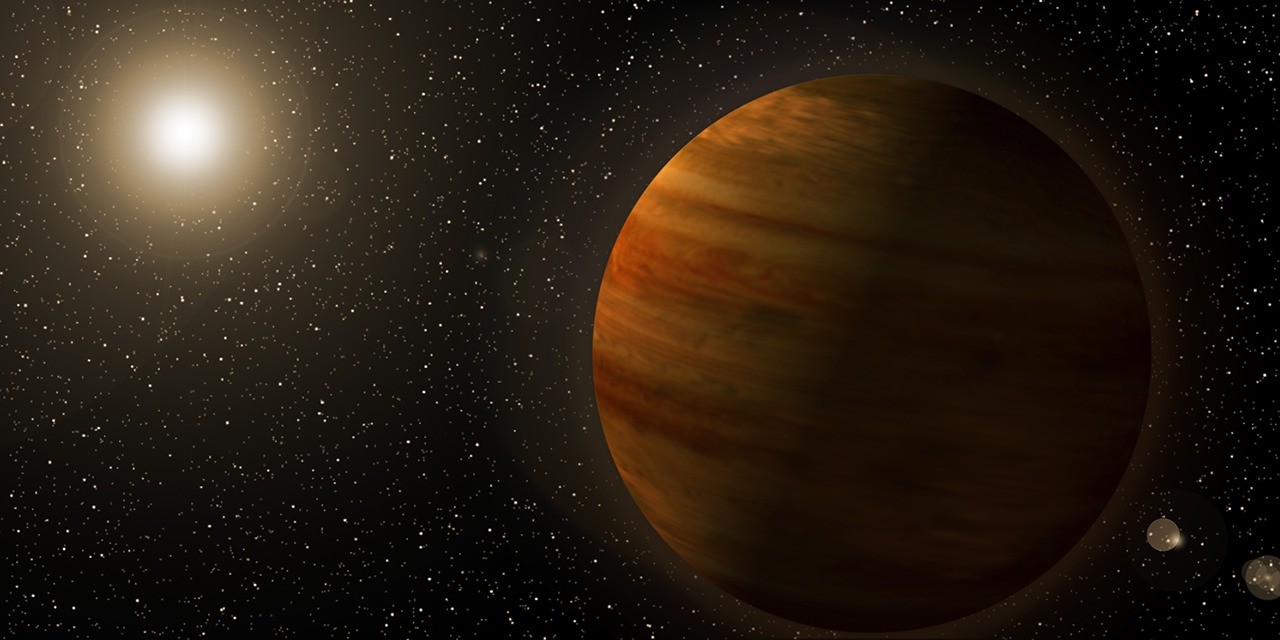
For the first time, NASA’s TESS (Transiting Exoplanet Survey Satellite) mission has identified a planet orbiting a distant star thanks to ripples in space-time. …
For the first time, NASA’s TESS (Transiting Exoplanet Survey Satellite) mission has identified a planet orbiting a distant star thanks to ripples in space-time. Unlike the star-hugging transiting planets TESS regularly reveals, the newfound world is a super-Jupiter orbiting far from its host star. “When TESS launched, no one expected it to ever be capable of finding this kind of planet,” said Diana Dragomir, a professor at the University of New Mexico in Albuquerque and co-author of a paper describing the results. At 1.6 times Jupiter’s mass and a similar orbital distance, it would be extremely unlikely to find such a planet via the primary detection method TESS was designed for. “The discovery implies that there are probably other so-called microlensing planets hiding in TESS’s data that we hadn’t previously thought to look for.” Astronomers found the first hint of the planet, called Gaia23bra b, in 2023 using ESA's (European Space Agency) now-retired Gaia space telescope. Gaia’s alert system flagged a star that brightened — something that can happen when a foreground star passes in front of a more distant one and magnifies its light through gravitational microlensing. Researchers later looked back through archived TESS data and found TESS had caught it too. “Gaia’s observations were too sparse to pick up on the planet,” said Mallory Harris, a Ph.D. candidate at the University of New Mexico, who led the study. …
Original source: NASA Breaking News
Mentioned
Jupiter · European Space Agency · Nancy Grace Roman Space Telescope