Kids with autism are prone to drowning. Florida is trying to prevent that
NPR News ·
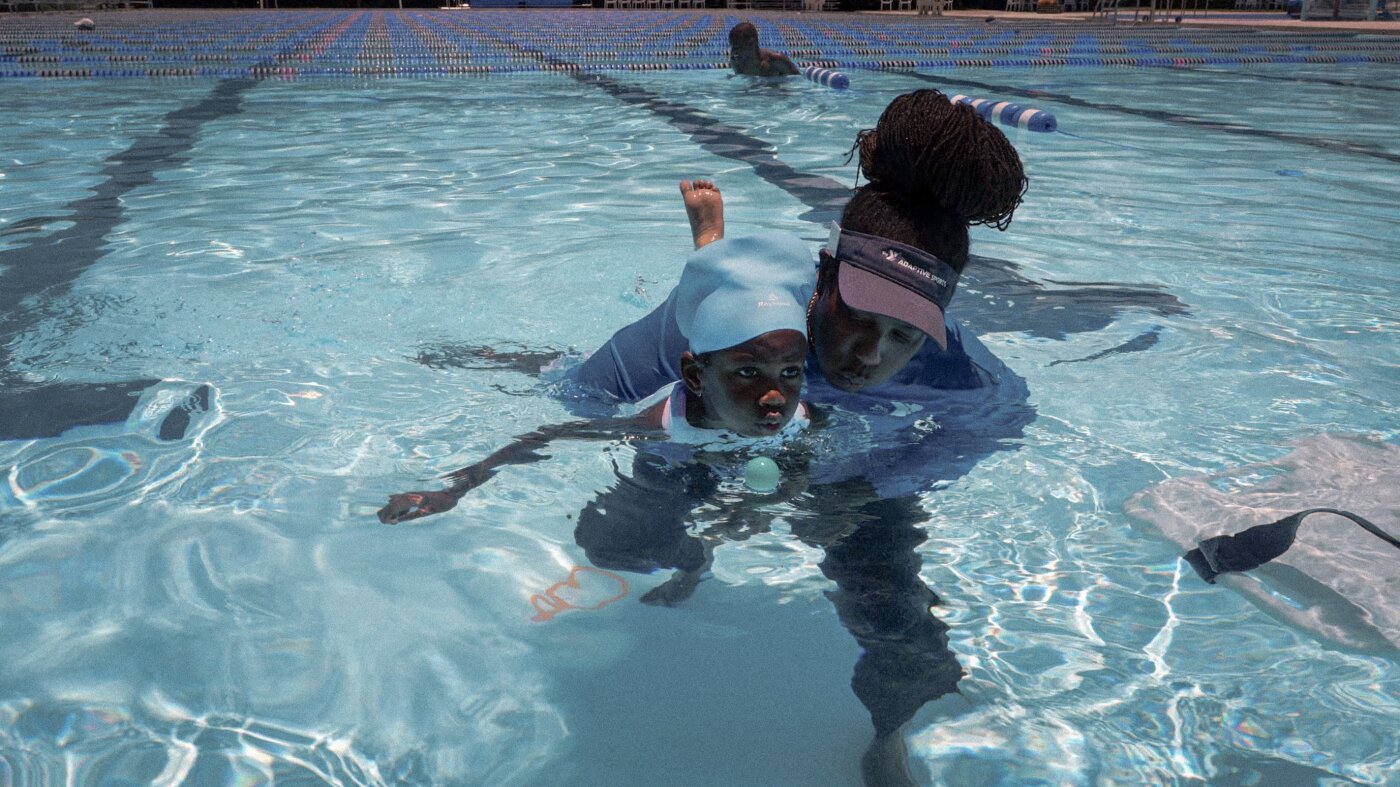
Garland Jones, recreational therapist and senior program director of the YMCA of South Florida's special needs program, teaches Mackenzie Wesley, 5, to breathe safely in water by using a ping pong …
Garland Jones, recreational therapist and senior program director of the YMCA of South Florida's special needs program, teaches Mackenzie Wesley, 5, to breathe safely in water by using a ping pong ball as a visual aid. LA Johnson/NPR hide caption toggle caption LA Johnson/NPR WESTON, Fla. — Mackenzie Wesley sports a big grin and bright blue Lilo & Stitch swim gear as she runs into her weekly swim lessons. It's fitting, because the 5-year-old has something in common with movie character Lilo: She adores water. "Whether it's the pool or beach, she enjoys it fully," says her dad Steven Wesley. Mackenzie isn't alone: Many kids with autism share a natural love for water because it can be sensory bliss — the feeling on their skin, the pressure and the sparkle of the water can all be soothing. Lucky for her, Mackenzie lives here, less than an hour outside of Miami in a state that's dotted with bodies of water. But there's a tragic reality tied to that fact, as Mackenzie's mom, Brittany Bucknor, is all too aware. "In Florida, there's water everywhere, and also with kids her age, and also just being on the spectrum, it's a very — way higher — rate of having an incident of drowning." Kids with autism are 160 times more likely than other children to die from drowning, according to a seminal 2017 study from Columbia University . In fact, in Florida, most children drown in backyard pools. That's largely because about half of autistic children have a tendency to wander from safe settings. …
Original source: NPR News