NASA may send a backup, nuclear-powered Mars rover to the Moon
Ars Technica ·
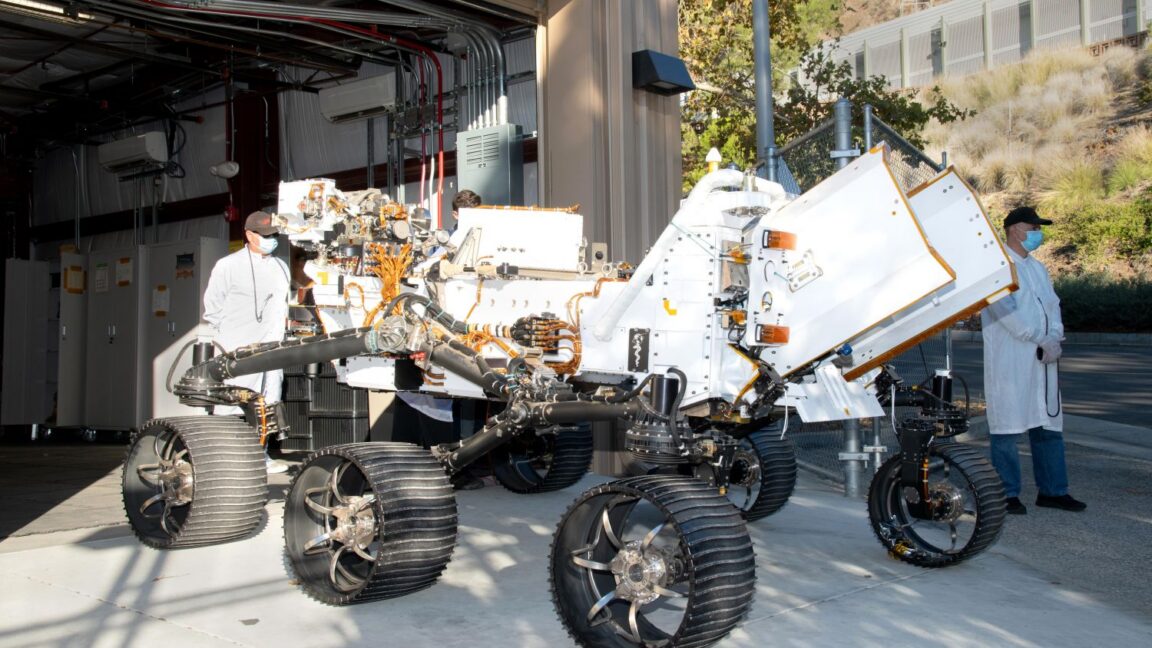
Perseverance launched to Mars in July 2020, and its predecessor, the similarly sized Curiosity rover, launched to the red planet in November 2011. …
Perseverance launched to Mars in July 2020, and its predecessor, the similarly sized Curiosity rover, launched to the red planet in November 2011. “It makes sense, early on, when we’ve got a problem that we might want to test it out here before we upload it to Mars,” Isaacman said. “But we’ve had years now of experience operating the two rovers on the surface of Mars, and we’ve got this hardware that the taxpayers invested a lot in. So the question was posed, what if we sent it to the Moon?” Although the Mars rovers were designed to operate on the surface of Mars, the JPL engineers said Promise could be modified to work on the Moon. NASA will also need to make some adjustments to the scientific instruments aboard the vehicle, but Isaacman said this represents a creative way to advance the agency’s interests in understanding the environment where it wants to establish a long-term human presence. “We’ve got the hardware, and this is exactly what we should be trying to do to put wins on the board, getting a capability like Promise to the surface of the Moon,” he said. Could do a lot of useful science There are many useful scientific and exploration objectives a rover like this could accomplish. NASA studied these questions a little more than a decade ago with an “Endurance” rover proposal that would have traveled nearly 2,000 km across the South Pole-Aitken basin on the far side of the Moon (see this large PDF file for more information). It was never built. …
Original source: Ars Technica