Tiny Antarctic sea creature could be key to treating melanoma, researchers say
The Guardian World ·
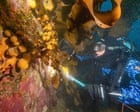
Researchers at the University of South Florida have discovered that bacterial toxins produced by tiny Antarctic sea creatures called ascidians could potentially treat melanoma. …
Researchers at a Florida university say bacterial toxins produced by tiny marine organisms they have studied in Antarctica could become an effective treatment for melanoma, the deadliest form of skin cancer. A team from the University of South Florida (USF) recently returned from a six-week expedition to one of the world’s remotest regions in which they collected samples of ascidians, invertebrates known as sea squirts that thrive in the icy waters. Brian Baker, professor of chemistry at USF, said toxins produced by the ascidians as protection against predators can be “repurposed”, with research his team has already undertaken showing that it has killed melanoma cells in mice. “The good news is it didn’t kill the mice,” he said. “It did kill their cancer, so we know it has the physiological properties to act like a drug. We need grams of material to do a bigger study in mice, perhaps go into other animal models, and if we can prove the safety, we can actually start some human trials.” Baker acknowledged the pathway to producing a safe and effective anti-melanoma drug, with approval for use in humans, is long. It would require a succession of strictly regulated and ever-expanding trials even after a drug was formulated. But knowledge gained from the expedition, which saw teams of divers descending to depths of up to 130ft for about half an hour at a time, could significantly advance the timeline, he said. …
Original source: The Guardian World