Daily briefing: Humans and great apes giggle in the same rhythms
Nature News ·
You have full access to this article via your institution. Hello Nature readers, would you like to get this Briefing in your inbox free every day? Sign up here . …
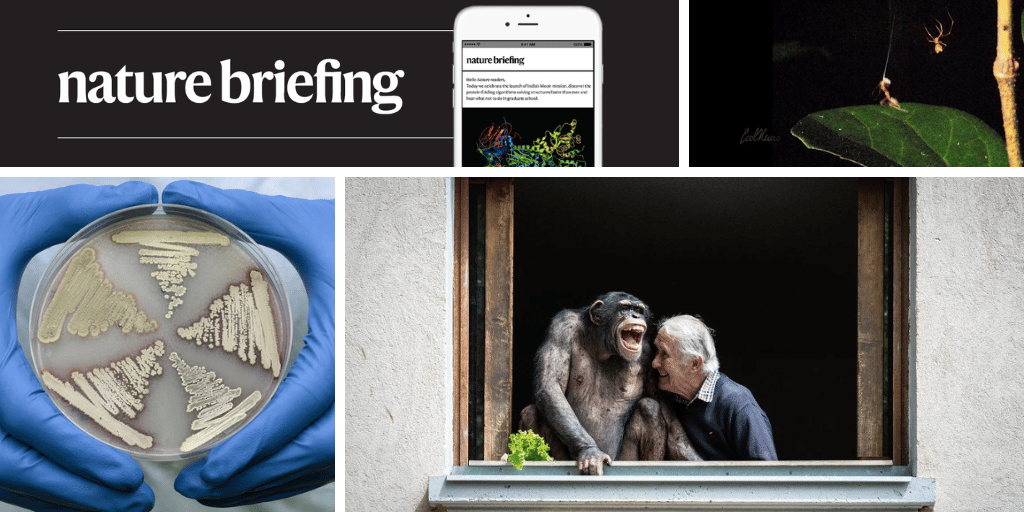
You have full access to this article via your institution. Hello Nature readers, would you like to get this Briefing in your inbox free every day? Sign up here . When laughing, chimpanzees and other great apes produce similar patterns of vocalization to human children. Credit: Jean-Philippe Ksiazek/AFP via Getty Chimpanzees ( Pan troglodytes ), gorillas ( Gorilla gorilla ) and children laugh in similar rhythms when tickled. Researchers found that kids and apes left evenly spaced intervals between laughing sounds during a tickle attack , though children had a faster laughter rhythm compared with apes. Laughter might have picked up pace during the course of human evolution, the team suggests, which could reveal “something about laughter itself, but also, in a way, about the evolution of human speech”, says primatologist and study co-author Chiara De Gregorio. Nature | 4 min read Reference: Communications Biology paper A newly discovered gene ‘megacluster’ in Streptomyces bacteria enables them to produce a variety of potent antibiotic compounds. These compounds act as a multi-pronged offensive weapon against other species, with each targeting different stages of the bacterial metabolic process . It’s more difficult for bacteria to develop resistance to attacks that hit several targets, so the discovery could lead to the development of new antibiotics, experts say. …
Original source: Nature News
Mentioned
Mediterranean · New York Times · International Space Station