AI helps decode new secrets from scrolls burned by Mount Vesuvius
CBS News Top ·
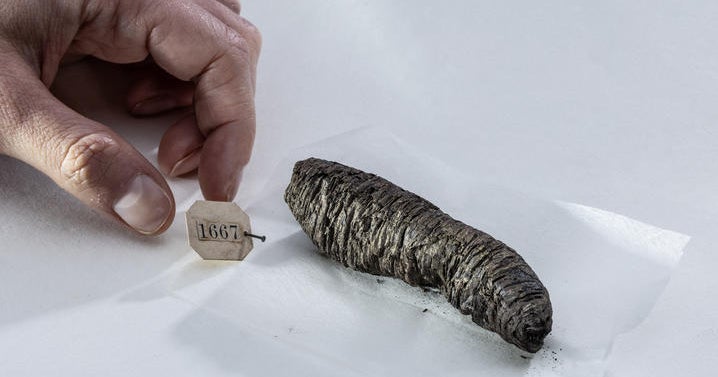
A University of Kentucky project using artificial intelligence to help decode an ancient Roman mystery has led to a major discovery, researchers announced Thursday . …
A University of Kentucky project using artificial intelligence to help decode an ancient Roman mystery has led to a major discovery, researchers announced Thursday . In 79 A.D., the eruption of Mount Vesuvius buried the Roman city of Pompeii and the nearby town of Herculaneum. During a dig in Herculaneum in the 18th century, archaeologists found 1,800 papyrus scrolls in an intact ancient library , deep under the site of a villa that was destroyed by Vesuvius' eruption. But reading them was impossible: The scrolls are brittle and charred, and unravelling them turns them into ash. For centuries, researchers have worked to interpret the scrolls. Recent technology led to a breakthrough: A particle accelerator and AI were used to identify ink, even faint traces, allowing researchers to virtually unwrap the delicate scrolls. But interpreting the ancient language is another project entirely. An unrolled Herculaneum scroll. National Library of Naples In 2023, Brent Seales launched the Vesuvius Challenge, a global competition offering prize money for those who can help interpret the writing. Three college students became the first to extract words from a carbonized scroll in 2024. But they only interpreted about 5% of one scroll. The second phase of the challenge led to Thursday's major discovery. …
Original source: CBS News Top