Two 'super-puff' cotton candy exoplanets are the lightest gas giants ever discovered
Space.com ·
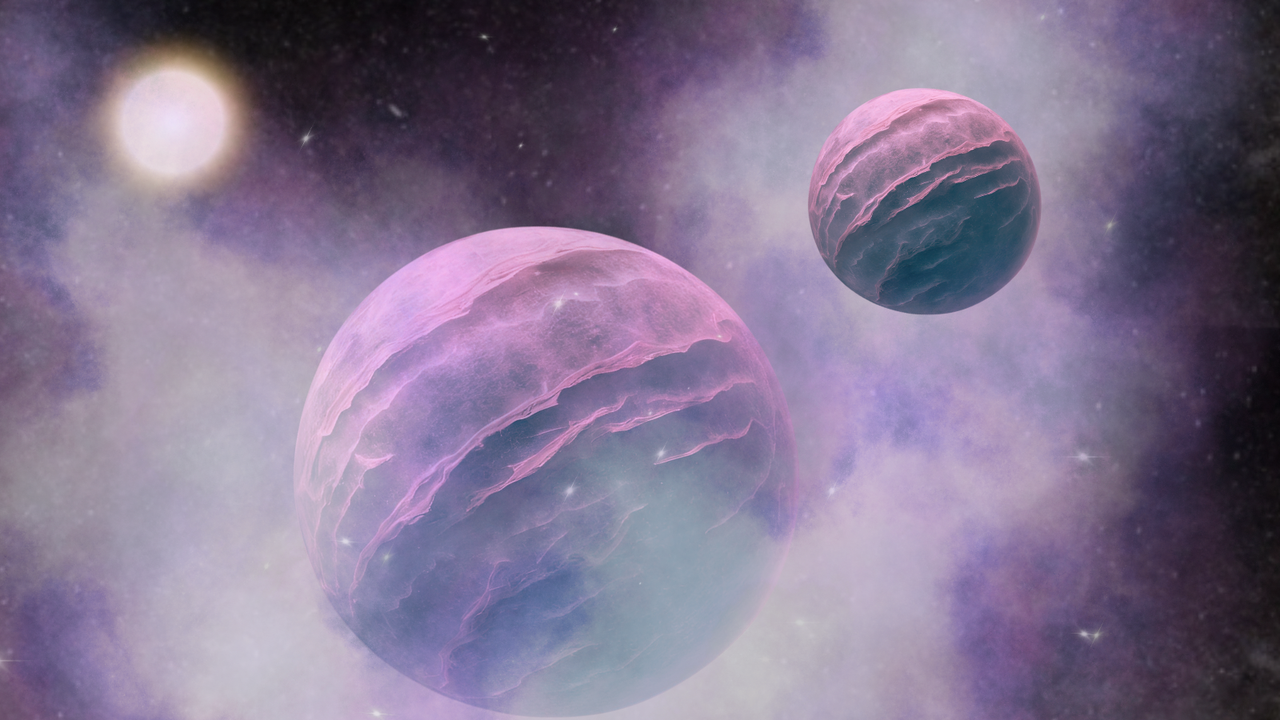
What is rarer than discovering a "super-puff" planet with densities much (much) lower than those of the solar system gas giants? Discovering two orbiting the same star. …
What is rarer than discovering a "super-puff" planet with densities much (much) lower than those of the solar system gas giants? Discovering two orbiting the same star. That is exactly what astronomers have done, finding two extrasolar planets, or exoplanets , that are super-puff siblings orbiting the same star. Both planets, designated TOI-791 b and TOI-791 c, have densities lower than that of cotton candy, making them the lightest exoplanets ever seen. "Only a handful of these super-puffy planets are known, and it is even rarer to find two in the same system," team leader George Dransfield of Oxford University said in a statement. "Their extremely low densities make them fascinating targets for understanding how planetary systems form and evolve." The two planets orbit a dwarf star called TOI-791, which is located around 1,110 light-years from Earth. Both planets are around the same size as Jupiter , but the solar system's most massive planet has a density 28 times greater than TOI-791 c and 35 times greater than TOI-791 b. The low density of these exoplanets aren't their only remarkable quality, however. The super-puff siblings are also locked in a rare dance that sees the inner planet complete five orbits as the outer planet completes three orbits. This is known as a 5:3 mean-motion resonance. …
Original source: Space.com
Mentioned
NASA · Earth · Jupiter · Antarctica · Oxford University · James Webb Space Telescope