Ancient Egyptian burial site reveals centuries of changing traditions
CBS News Top ·
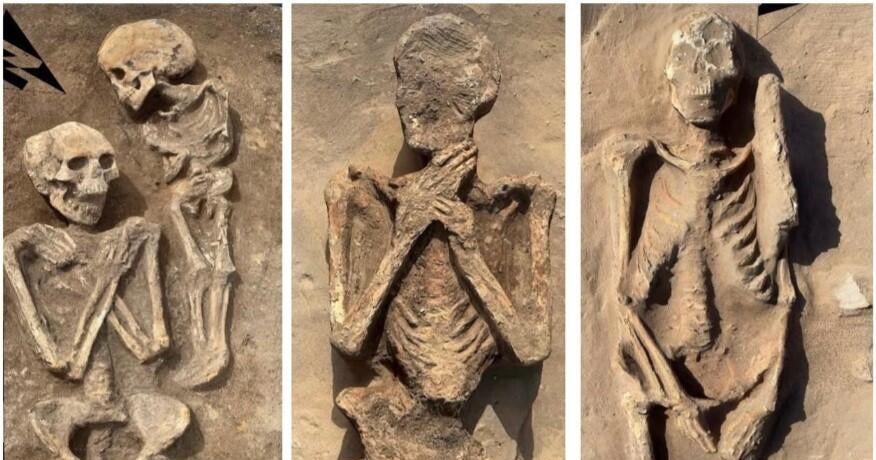
Cairo — Egyptian archaeologists say they've uncovered remains and a myriad of artifacts in part of a Greco-Roman cemetery that dates back more than 2,300 years, revealing the evolution of funerary …
Cairo — Egyptian archaeologists say they've uncovered remains and a myriad of artifacts in part of a Greco-Roman cemetery that dates back more than 2,300 years, revealing the evolution of funerary practices over some six centuries and showing the importance of the site itself. Burials discovered at the Tell Kom Aziza site, in the Nile Delta in Egypt's northern Beheira province, near the Mediterranean coast, date from about 332 B.C. to 395 A.D. Remains and artifacts found at the site show widely varying burial practices and they point to the site itself morphing over its long period of use from a settlement into a cemetery. "This is a very important discovery because it sheds light on and reveals more details about the site," Nevine El-Aref, media adviser to the Minister of Tourism and Antiquities, told CBS News. "It is a unique example that shows the transformation of a settlement hub into a major burial ground spanning different ancient eras." Burials discovered at the Tell Kom Aziza burial site in Egypt's Nile Delta range from simple pits to graves lined with mudbricks to painted plaster coffins. Egyptian Ministry of Tourism and Antiquities Excavations revealed burial practices ranging from simple pit burials, with bodies placed directly in the ground, to graves lined with mudbricks and burials in painted plaster coffins. There were also individual and collective burials, according to Dr. …
Original source: CBS News Top