Antibiotic cocktail made by soil bacteria can kill superbugs
Nature News ·
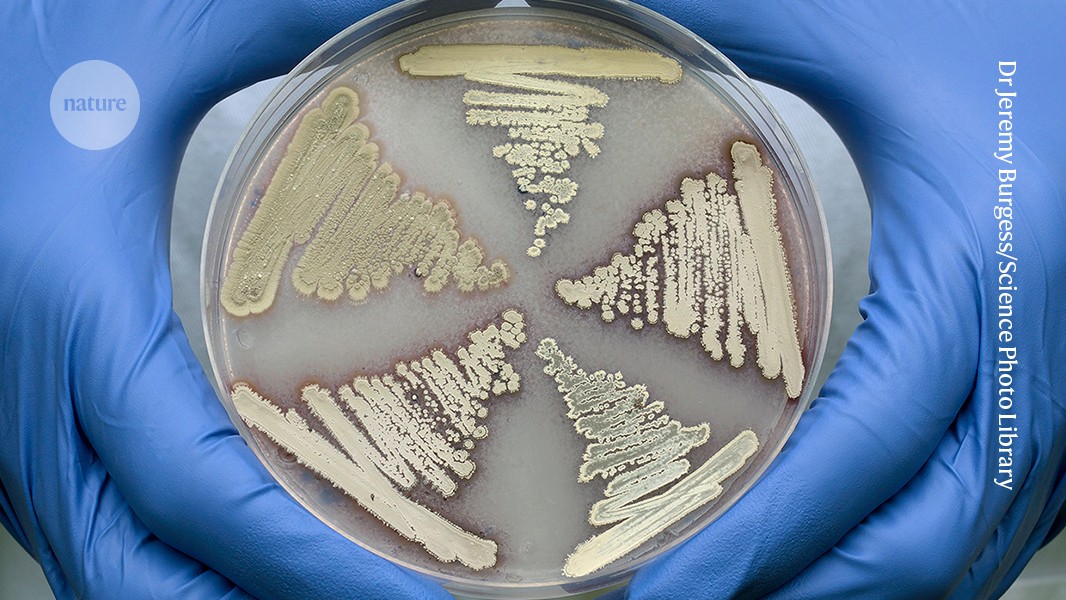
Streptomyces bacteria make multiple antibiotics that target the production of vitamin B7. Credit: Dr Jeremy Burgess/Science Photo Library Scientists have identified a cluster of genes in a common …
Streptomyces bacteria make multiple antibiotics that target the production of vitamin B7. Credit: Dr Jeremy Burgess/Science Photo Library Scientists have identified a cluster of genes in a common soil bacterium that produce a range of antibiotics that can act against multi-drug-resistant bacteria. Researchers say that the discovery could lead to the development of antibiotics that are harder for pathogens to develop resistance to. Antibiotic-resistant infections are on the rise as bacteria develop ways to get around existing drugs and are predicted to kill some 39 million people between 2025 and 2050. Antibiotics with new modes of action are desperately needed. In a study published in Nature today 1 researchers report a ‘megacluster’ of genes in Streptomyces bacteria that target a key metabolic process in bacteria. Streptomyces is one of the most studied bacterial genera and produces many antibiotic compounds, including those used to produce streptomycin, the first effective antibiotic against tuberculosis. “They’ve discovered something new in a system so extensively studied — hidden in plain sight,” says Mark Blaskovich, who works on antibiotic development at the University of Queensland in Brisbane. The gene cluster produces five compounds — four antibiotics and a protein — that target different stages of the production of biotin, or vitamin B7, which is essential for bacterial cell growth. …
Original source: Nature News