Early land animals skipped the tadpole phase
Ars Technica ·
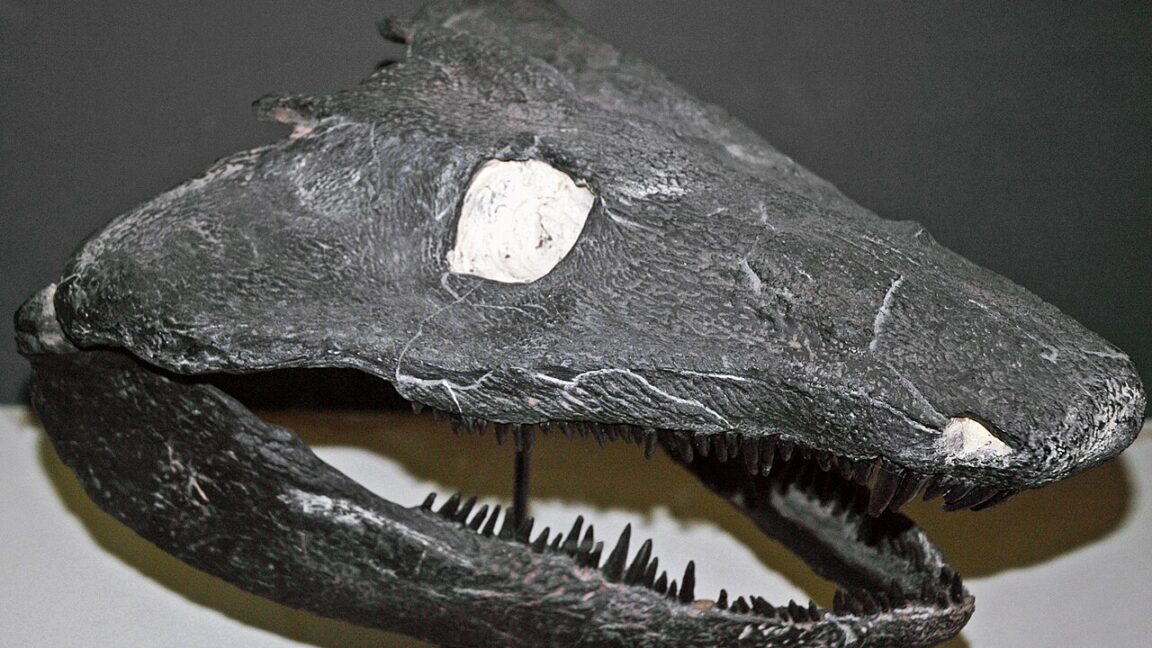
Without the tadpole phase and metamorphosis, though, the transition from water to land was probably way tougher than we thought. …
Without the tadpole phase and metamorphosis, though, the transition from water to land was probably way tougher than we thought. Amphibian innovation “We have lots of assumptions in our field that are based on relatively limited data,” Pardo said. One of those assumptions was that a distinct aquatic larval stage made the water-to-land transition easier for early tetrapods. While direct development, without undergoing a radical metamorphosis early in the animal’s lifecycle, might appear to be a simpler solution, it likely made the lives of young embolomers considerably harder. The first challenge they faced was being tied to the same environment throughout their entire lifespan. Unlike amphibian tadpoles, they lived in the same ecological niche as larger juveniles and three-meter-long adults and had to compete with them for resources. Then there was the problem of supporting their body mass on land. The team noted in the paper that juvenile embolomers had weak, poorly developed limbs at hatching, which probably left them unable to move long distances across land. They were likely stuck wherever they hatched. “It certainly makes it harder to not have a tadpole stage,” Pardo said. He suggested that this is evidence that amphibian metamorphosis is not an ancient evolutionary stepping stone that enabled the first animals to expand out of water and conquer the land, which was then preserved in modern frogs or toads. …
Original source: Ars Technica