A 'new' star could finally appear in the night sky this week, thanks to a once-in-a-lifetime explosion
Space.com ·
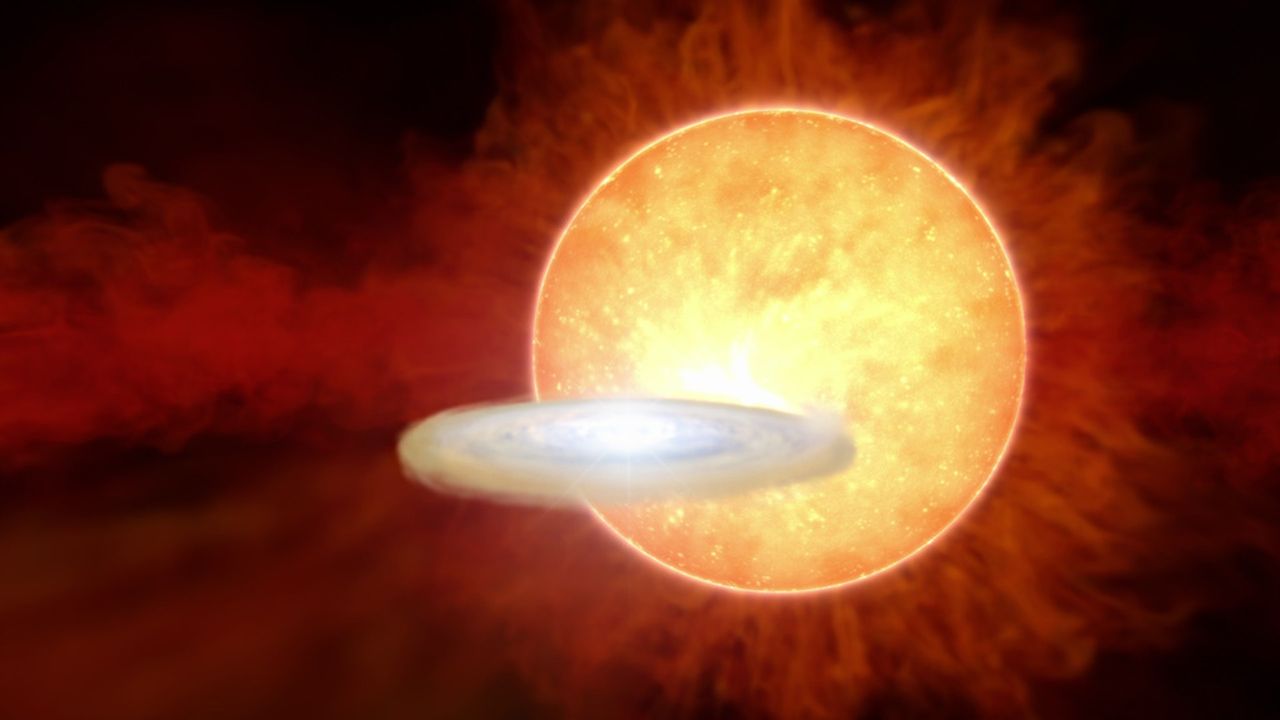
A once-in-a-lifetime stellar eruption could occur at any time, potentially causing a 'new star' to appear in the night sky. …
A once-in-a-lifetime stellar eruption could occur at any time, potentially causing a 'new star' to appear in the night sky. If it does, the star system T Coronae Borealis could suddenly brighten to rival Polaris, the North Star. Here's what you need to know about the "Blaze Star" T. Coronae Borealis (T CrB). T CrB is a prime example of a recurring nova. This thermonuclear explosion erupts from the atmosphere of a white dwarf star roughly once every 80 years, when it reaches a point of critical mass, having stripped vast quantities of material from a co-orbiting red giant . After each eruption, the white dwarf returns to vampirically feeding on its companion star, until ready to start the process anew. Recurring novas like T CrB are extremely rare, with only five known to exist within the entirety of the Milky Way, according to NASA . When will T. Coronae Borealis erupt? T CrB brightens roughly once every 80 years — an average based on eight centuries of historical observations. The most recent deluge of nova light reached Earth in 1946, prompting some astronomers to predict that the next brightening could occur as early as February 2024 , based on an earlier dip in the system's light that echoed historical data. It seems that T CrB had other ideas, however, and instead has remained stubbornly dim through numerous unsuccessful prediction attempts . …
Original source: Space.com