James Webb Space Telescope captures the star-forming clouds of Orion A in stunning detail | Space photo of the day for June 22, 2026
Space.com ·
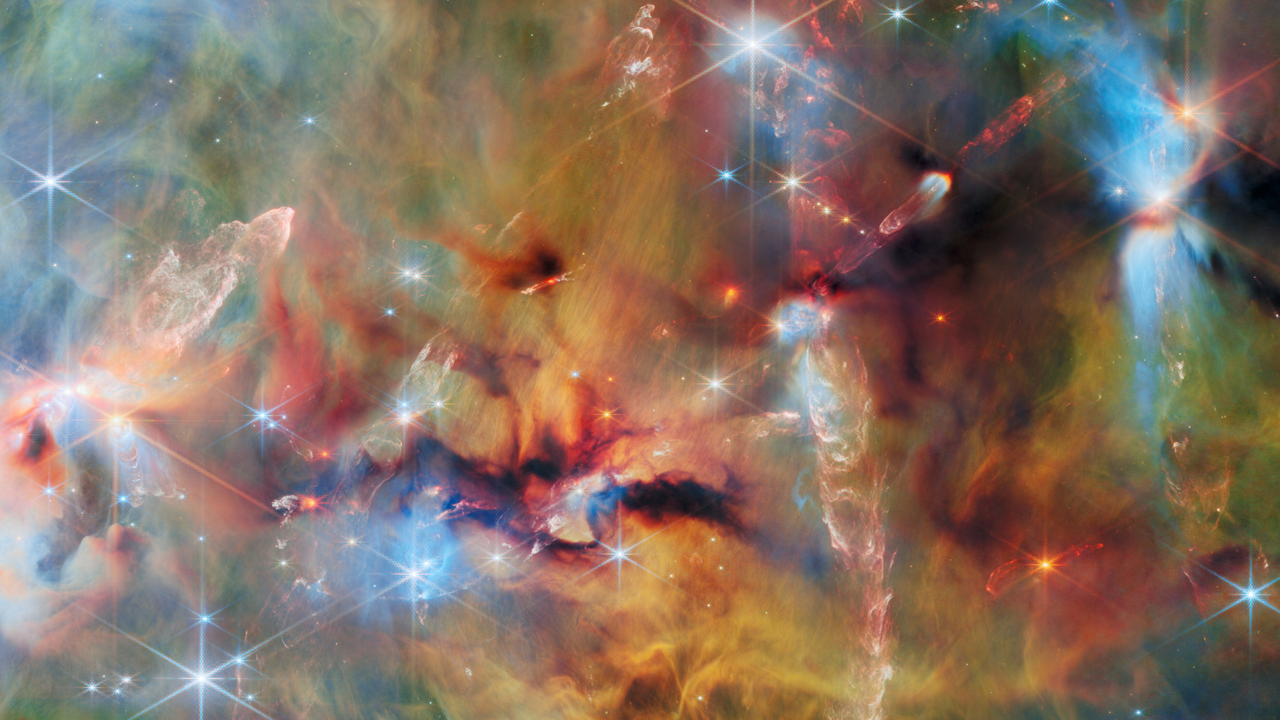
The James Webb Space Telescope Picture of the Month shows the giant molecular cloud Orion A, an area of the sky replete with star-forming clouds. (Image credit: ESA/Webb, NASA & CSA, T. Megeath, M. …
The James Webb Space Telescope Picture of the Month shows the giant molecular cloud Orion A, an area of the sky replete with star-forming clouds. (Image credit: ESA/Webb, NASA & CSA, T. Megeath, M. Zamani (ESA/Webb) Acknowledgement: M. H. Özsaraç) The image of the day for Monday (June 22) shows the star-forming clouds of Orion A in stunning detail. Released as the James Webb Space Telescope (JWST) Picture of the Month, the image further demonstrates the impact the $10 billion space telescope has had on our view of the cosmos since it began operations in July 2022. What is Orion A? Located around 1,300 light-years from Earth and situated to the south of Orion's Belt in the night sky, Orion A is one of the largest and closest molecular clouds to our planet. Shaped like a filament, this structure of gas and dust is around 290 light-years long. Part of the Orion molecular cloud complex, Orion A is a packed stellar nursery. Over the last few million years alone, it is estimated that Orion A has given birth to around 3,000 stellar objects. The molecular cloud is also host to many young protostars surrounded by platters of gas and dust called protoplanetary disks, which, as the name suggests, will form planets. Thus, studying regions like Orion A could be key to understanding how the solar system came to be around 4.6 billion years ago.
Original source: Space.com