A mysterious gamma-ray stream comes from the Milky Way's center. Could dark matter have something to do with it?
Space.com ·
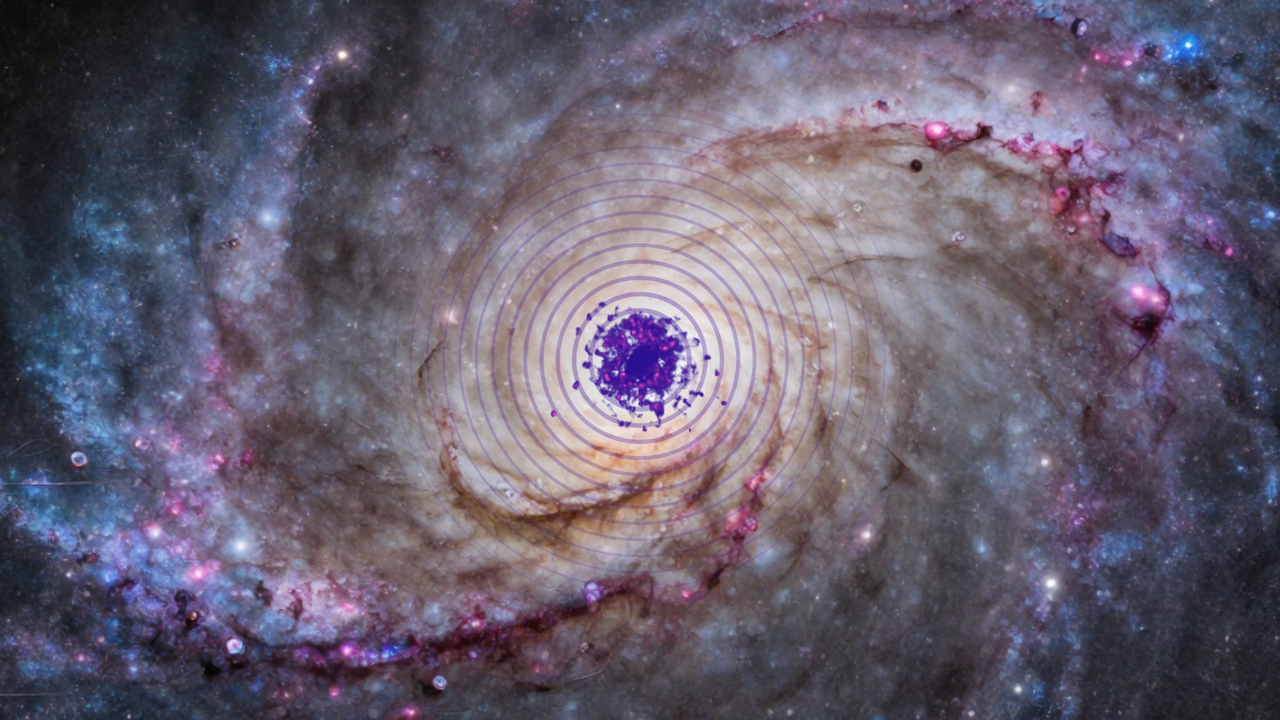
One of the most hotly debated mysteries in astronomy is set to continue, as new research fails to rule out self-annihilating dark matter as the source of gamma-ray emissions from the heart of the …
One of the most hotly debated mysteries in astronomy is set to continue, as new research fails to rule out self-annihilating dark matter as the source of gamma-ray emissions from the heart of the Milky Way. Known as the Galactic Center Excess, a spherical gamma-ray glow extending out for thousands of light-years from the core of our galaxy, this high-energy light has baffled researchers for over a decade. While several possible explanations for the Galactic Center Excess have been put forward, including a population of rapidly spinning neutron stars called pulsars, one of the most prevalent has been a specific type of dark matter particle. Dark matter is the mysterious stuff that accounts for 85% of the universe's matter. It is effectively invisible because it doesn't interact with light or with "ordinary" matter composed of atoms. That fact has led to many possible dark matter candidate particles being proposed, including some that self-annihilate. This is akin to what happens when an electron meets its antimatter counterpart, or positron. The two annihilate each other, releasing energy into the cosmos. For self-annihilating dark matter, these particles would be their own antiparticles, meaning when they interact, they would annihilate and release energy as gamma rays . …
Original source: Space.com