'No one thought it was going to be possible.' A space telescope is falling out of space. This is NASA's daring plan to save it.
Space.com ·
WALLOPS ISLAND, Va. — For over 20 years, NASA's Swift space observatory has been conducting prolific science in orbit, hunting for signs of gamma-ray bursts — the most powerful explosions in the …
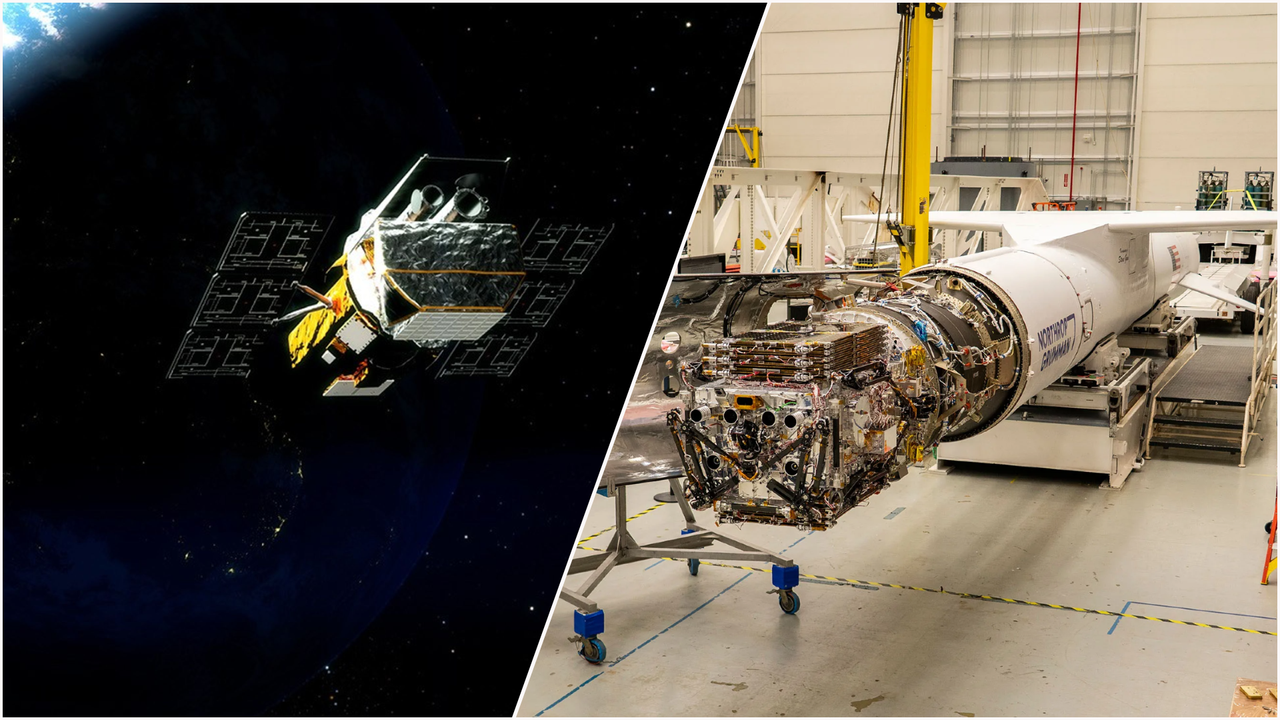
WALLOPS ISLAND, Va. — For over 20 years, NASA's Swift space observatory has been conducting prolific science in orbit, hunting for signs of gamma-ray bursts — the most powerful explosions in the universe. Now, it's falling to Earth , doomed to a fiery death by the end of the year as its orbit decays. But maybe not. NASA, it turns out, has a daring rescue mission in the works, something never before attempted in space: the Swift Boost mission . The endeavor calls for an untested spacecraft built by the Arizona company Katalyst Space Technologies to rendezvous and dock with Swift — something the observatory was never designed to do — before the observatory falls back to Earth . If all goes well, Katalyst's space tug (it's called Link) will lift the Swift observatory into a higher, safer orbit — one that will add years of life to the aging space telescope's mission. Liftoff is officially set for June 27, with Link launching on the last-ever Pegasus XL rocket, an air-launched booster built by Northrop Grumman . "Frankly, I have to be honest: No one thought it was going to be possible," Shawn Domagal-Goldman, NASA's Astrophysics Division director, told reporters here on Wednesday (June 17). "No one thought we would get as far as we've already gotten today." What stands out most is how quickly the mission came together. NASA’s Neil Gehrels Swift Observatory, shown in this artist’s concept, orbits Earth as it studies the ever-changing universe. …
Original source: Space.com