How the world’s voracious appetite for shrimp is destroying Ecuador’s mangroves
The Guardian Business ·
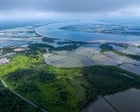
A t low tide, Johana Carolina Cruz Potes steps into the mudflats around Isla Costa Rica, in Ecuador ’s Jambelí Archipelago. …
A t low tide, Johana Carolina Cruz Potes steps into the mudflats around Isla Costa Rica, in Ecuador ’s Jambelí Archipelago. Holding a bucket and a short metal hook, she probes the tangled roots of a mangrove patch, searching for concha negra , black-shelled cockles, buried beneath the sludge. Cruz Potes has done this work since she was nine, when she first followed her father into the mud. But earning a living from shellfish gathering – often the only income for families here – has become harder as grounds shrink and catches decline. Erika Alvarado collects concha negra, black-shelled cockles, from among the roots of the mangroves of Isla Costa Rica in El Oro. Photograph: Vicente Gaibor Crabs are also collected when the tide goes out. Photograph: Vicente Gaibor For Cruz Potes, now 32, there is little doubt where the blame lies. Pointing towards a large tank, she says: “When the shrimp farms arrived, they cleared all the trees to build those ponds. But the conchas live in the roots. When the trees go, they go too.” Over the past decade, Ecuador’s shrimp production has nearly quadrupled, overtaking oil as the country’s top export. Nearly all goes to China, the US and Europe, with exports increasing fivefold after tariffs were eliminated. Production has pushed farms deeper into landscapes already scarred by deforestation. Between 1969 and 1999, Ecuador lost up to 43% of its mangroves, and shrimp farms now cover about 1.5 times the area of the remaining mangroves. …
Original source: The Guardian Business