Juicy new details emerge about an asteroid NASA's Lucy spacecraft flew by last year
Space.com ·
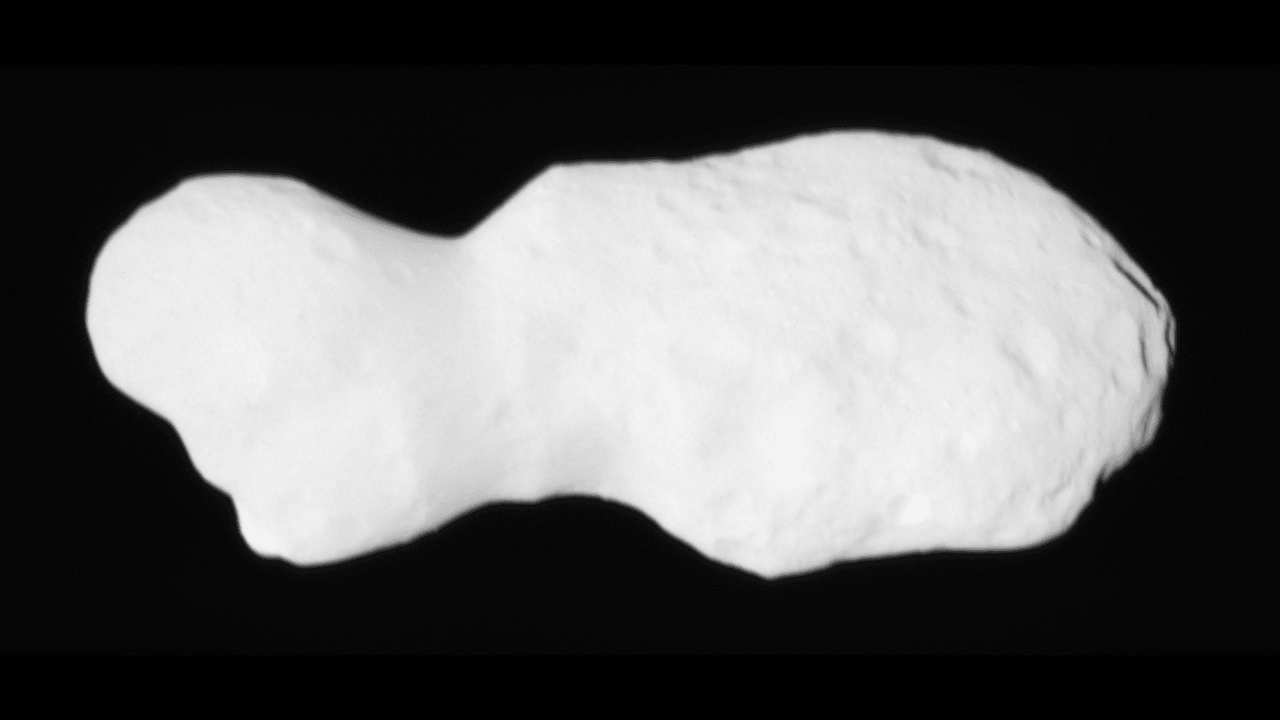
Last year, NASA's Lucy spacecraft encountered a bi-lobed asteroid that is a chunk of an even larger rocky body that was smashed apart in an almighty collision 155 million years ago. …
Last year, NASA's Lucy spacecraft encountered a bi-lobed asteroid that is a chunk of an even larger rocky body that was smashed apart in an almighty collision 155 million years ago. This little pitstop happened on Lucy's way to a rendezvous with the Trojan asteroids that shadow Jupiter around the sun. The asteroid 52246 Donaldjohanson, better known as "DJ" to Lucy 's mission scientists and named after the paleoanthropologist who discovered the Lucy hominin fossil in Ethiopia in 1974, orbits the sun in the inner part of the main asteroid belt between Mars and Jupiter . The true Lucy fossil dates back in time 3.2 million years and is an important link in the evolutionary chain that led to homo sapiens. Likewise, primitive asteroidal bodies are somewhat like fossilized remnants of the building blocks of the solar system 's planets, including Earth . Understanding the make-up of these asteroids and where they formed versus where they are now can provide crucial insights into how Earth was assembled and where its organic materials and water may have come from. Lucy flew past DJ in April of 2025. It is a pretty primitive asteroid, meaning that it has, or once upon a time had, certain volatile materials such as water-ice, as well as plenty of carbon — all things that can be removed thermally over time. Most objects that contain volatiles originate in the outer solar system, where it is cold enough that the volatiles do not sublimate away. …
Original source: Space.com