Juneteenth: How news of the Emancipation Proclamation spread through the South
NPR News ·
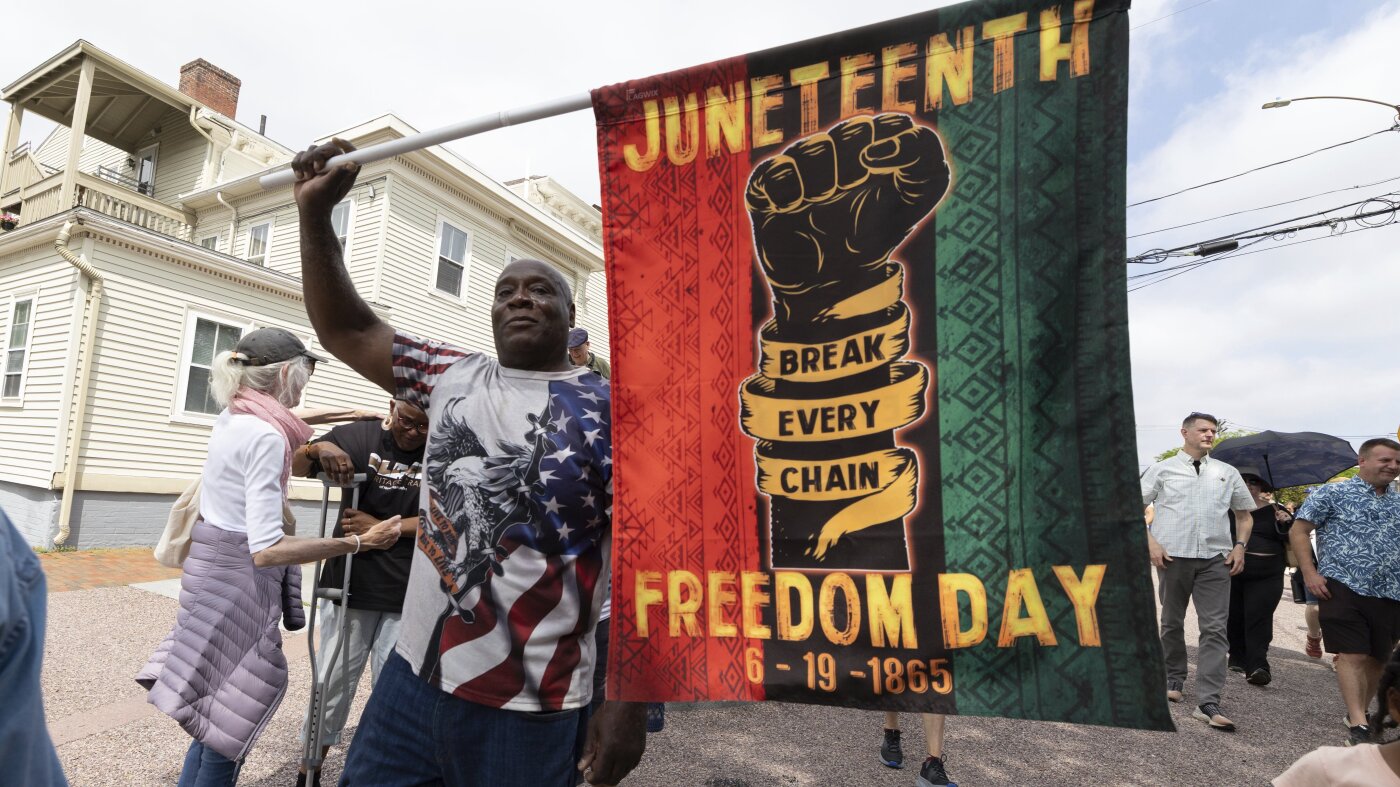
Robert Reid holds a flag during a Juneteenth celebration at the African Burying Ground Memorial Park Thursday, June 19, 2025, in Portsmouth, N.H. …
Robert Reid holds a flag during a Juneteenth celebration at the African Burying Ground Memorial Park Thursday, June 19, 2025, in Portsmouth, N.H. Michael Dwyer/AP hide caption toggle caption Michael Dwyer/AP Weeks after the Civil War's guns fell silent and barely two months after President Abraham Lincoln's assassination, Union troops arrived in Galveston, Texas. They had come to enforce the Emancipation Proclamation, an order freeing enslaved people in seceded Confederate states. And the date they arrived — June 19, 1865 — is now remembered as the first "Juneteenth." The Emancipation Proclamation had been issued years earlier during the war, on Jan. 1, 1863. It's the version most commonly emphasized in history books: the executive order that Lincoln himself reportedly said was "the great event of the nineteenth century" and his lasting legacy. But word of such an order already been circulating throughout the South for months. A preliminary proclamation , which contained much the same wording as the historic order, was issued on Sept. 22, 1862, days after the Battle of Antietam — the single bloodiest day in American military history. The purpose of it was to "warn that if the Confederate states don't return to the Union by January 1st, [Lincoln] will in fact issue a final proclamation," according to Harold Holzer, a Lincoln historian. Not all enslaved people immediately knew about Lincoln's orders, but many learned of it while the fighting was still raging. …
Original source: NPR News