Cell transplant across the tree of life hints at how animals emerged
Nature News ·
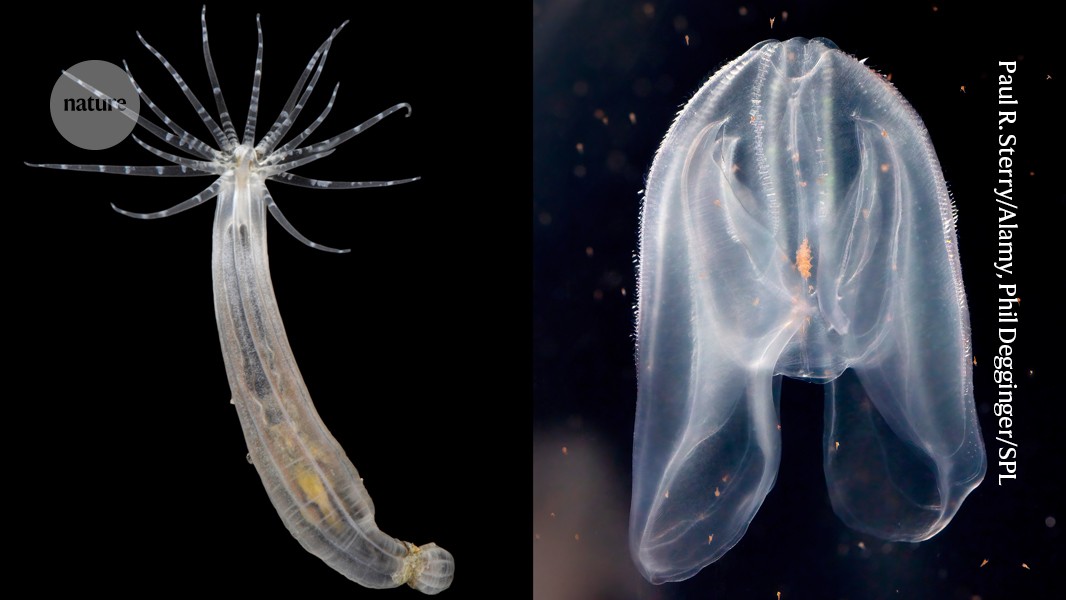
Researchers transplanted cells between embryos of a comb jelly ( Mnemiopsis leidyi, right) and a starlet sea anemone ( Nematostella vectensis , left). Credit: Paul R. …
Researchers transplanted cells between embryos of a comb jelly ( Mnemiopsis leidyi, right) and a starlet sea anemone ( Nematostella vectensis , left). Credit: Paul R. Sterry/Nature Photographers Ltd/Alamy, Phil Degginger/Science Photo Library More than a century ago, embryologist Hilde Mangold conducted a strange experiment that transformed biology. As a PhD student in the 1920s, she moved a lump of cells from embryos of one newt species into another. The transplanted cells caused a secondary ‘body axis’ to form in the host embryo, complete with a nervous system and a precursor to the spine. Mangold showed that much of the secondary body axis developed from the recipient embryo tissues. The discovery of an embryonic ‘organizer’ that orchestrates the formation of a body axis “established a whole new area of developmental biology”, says Stanislav Kremnyov, a developmental biologist at the Friedrich Schiller University Jena in Germany, who is now following in Mangold’s footsteps. In a study published in Nature this week 1 , Kremnyov and his colleagues report the discovery of an embryonic organizer in marine predators called comb jellies (Ctenophora) and their successful transplantation into sea anemones (Cnidaria) — which belong to an entirely different phylum — forming extra mouths and pharynxes. Many scientists think comb jellies belong to the earliest branch of the animal family tree. …
Original source: Nature News