Freezing brain damage in its tracks: cooling drugs limit stroke injury in mice
Nature News ·
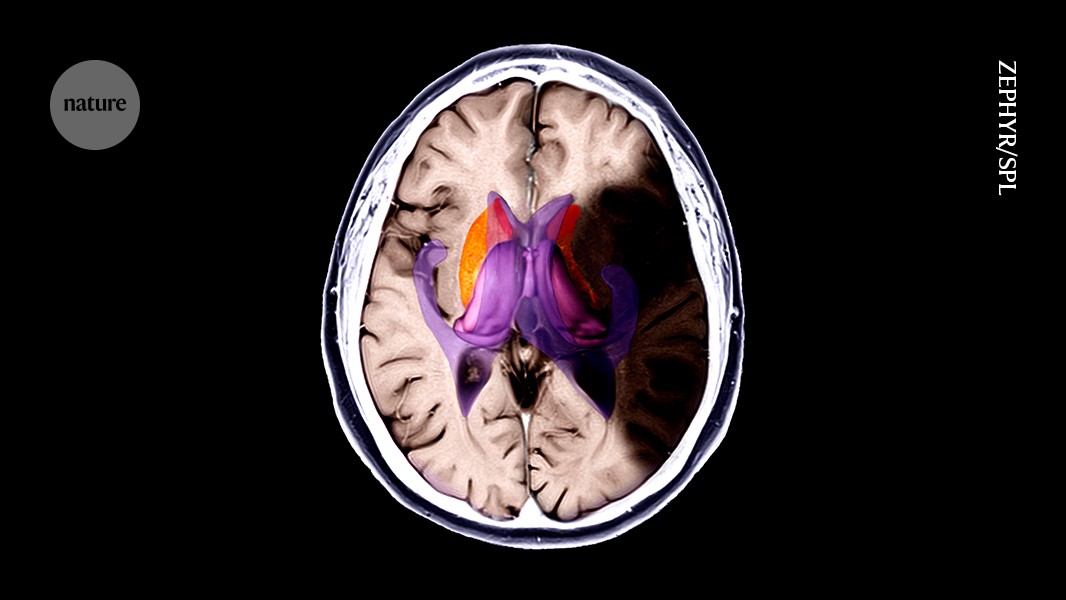
A stroke can lead to a large area of dead brain tissue (black), but a drug combination could help to minimize damage by slowing brain cells’ metabolism. …
A stroke can lead to a large area of dead brain tissue (black), but a drug combination could help to minimize damage by slowing brain cells’ metabolism. Credit: ZEPHYR/SPL A combination of two well-established drugs reduces stroke-related brain damage in mice after sharply lowering the rodents’ body temperature, reports a study published today in Science Translational Medicine 1 . A trial of the drugs in humans with stroke showed that the therapy was safe but ineffective at the doses used. Such drugs could one day extend the window of time for people with stroke to receive treatments that restore blood flow before too much damage is done, says Shaun Morrison, a neuroscientist at Oregon Health & Science University in Portland. Just chilling For decades, scientists have been interested in the use of hypothermia — drastically reducing the body’s core temperature — to lessen brain damage from various health conditions. Among them is a type of stroke that occurs when a blood clot or other obstruction blocks a blood vessel in the brain, depriving the neurons of oxygen. One theory is that inducing hypothermia during this event could decrease the metabolic activity of the neurons. This might keep the cells alive longer, giving physicians more time to try to remove or dissolve the blood clot . Hypothermia has become a standard of care for cardiac arrest, among other conditions. …
Original source: Nature News