Cortical development dynamics across autism spectrum disorder mouse models
Nature News ·
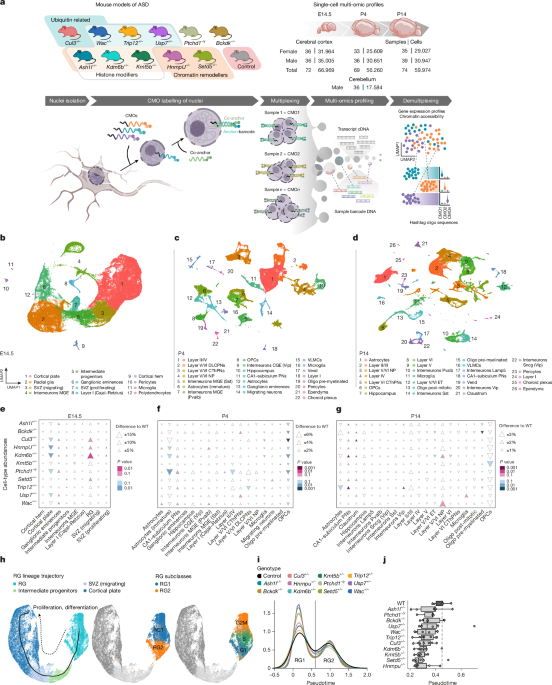
Animals All animals used in this study were approved by the Institutional Animal Care and Use Committee at ISTA and by the Bundesministerium für Bildung, Wissenschaft und Forschung, Austria (approval …
Animals All animals used in this study were approved by the Institutional Animal Care and Use Committee at ISTA and by the Bundesministerium für Bildung, Wissenschaft und Forschung, Austria (approval numbers BMWFW−66.018/0008-WF/II/3b/2014, BMWFW-66.018/0012-WF/V/3b/2015, BMWFW-66.018/0012-WF/V/3b/2017, BMWFW-66.018/0015-V/3b/2019, BMWFW-66.018/0032-V/3b/2019, BMBWF-V/3b/2020-0.342.159, BMBWF-V/3b/2020-0.148.791, BMBWF-V/3b/2021-0.291.172, BMBWF-V/3b/2021-0.291.177, BMBWF-V/3b/2022-0.292.788 and BMBWF-V/3b/2022-0.121.445). All our mutant lines were maintained in a C57BL/6J background. To maintain this background, colonies are continuously refreshed by mating mutants with C57BL/6J animals drawn from a continuously refreshed central C57BL/6J colony. All experiments were performed on mice ranging from E14.5 to P4 and P14. Embryonic time points were determined by plug checks after timed matings, defining E0.5 as the morning post-coitum. Animals were kept in the Preclinical Facility at ISTA, housed in commercially available individually ventilated cages under defined standard laboratory conditions (room temperature 22 ± 1 °C, relative humidity 55 ± 10%) on a 12-h light–dark cycle (lights on at 07:00). Animals were housed in groups of 3–4 animals per cage, with food and water available ad libitum. Experiments were carried out under specific pathogen-free conditions, and the health status of the mouse lines was routinely checked by a veterinarian. …
Original source: Nature News