On a flight home, a stranger helped her understand what came next
NPR News ·
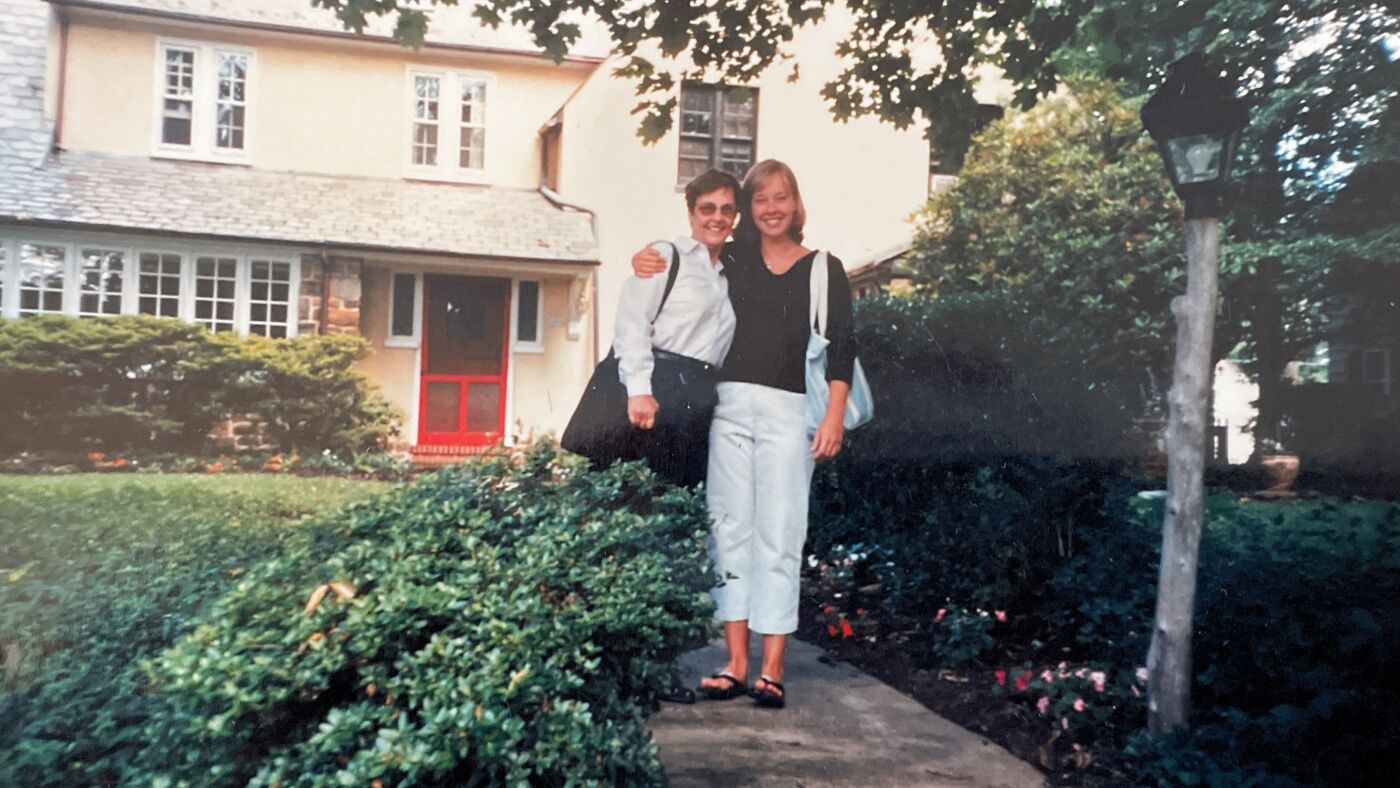
Rebecca (right) smiles with her mother in 2001, the year she had her surgery. Rebecca Simonitsch hide caption toggle caption Rebecca Simonitsch In the summer of 1995, when she was 15, Rebecca …
Rebecca (right) smiles with her mother in 2001, the year she had her surgery. Rebecca Simonitsch hide caption toggle caption Rebecca Simonitsch In the summer of 1995, when she was 15, Rebecca Simonitsch woke up in the hospital. She later learned she had had a series of convulsive seizures that put her into a coma. For the next three years, she took medication to prevent future episodes. At 18, before she left for college, her doctors took her off the medication. That's when she began noticing more subtle kinds of seizures, known as focal seizures. She later realized she had probably been experiencing them on and off ever since she left the hospital. "The average person would likely have never known when I was having a seizure," Simonitsch said. "[But] if I tried to speak during them, my words would come out sounding a little like gibberish. And then I would also feel nausea, weakness and fatigue." Simonitsch was diagnosed with epilepsy. She cycled through multiple medications to stop the seizures, but nothing worked. She could no longer drive, and the side effects of the medication became unmanageable. By the time she was 20, it was clear something had to change. That winter, she flew from Charleston to Baltimore to meet with a neurologist at Johns Hopkins Hospital. After many tests, he identified the source of her seizures — scar tissue in her left temporal lobe — and told her she was a candidate for brain surgery. …
Original source: NPR News