Don't miss the moon lead a dazzling mini 'planet parade' on June 17
Space.com ·
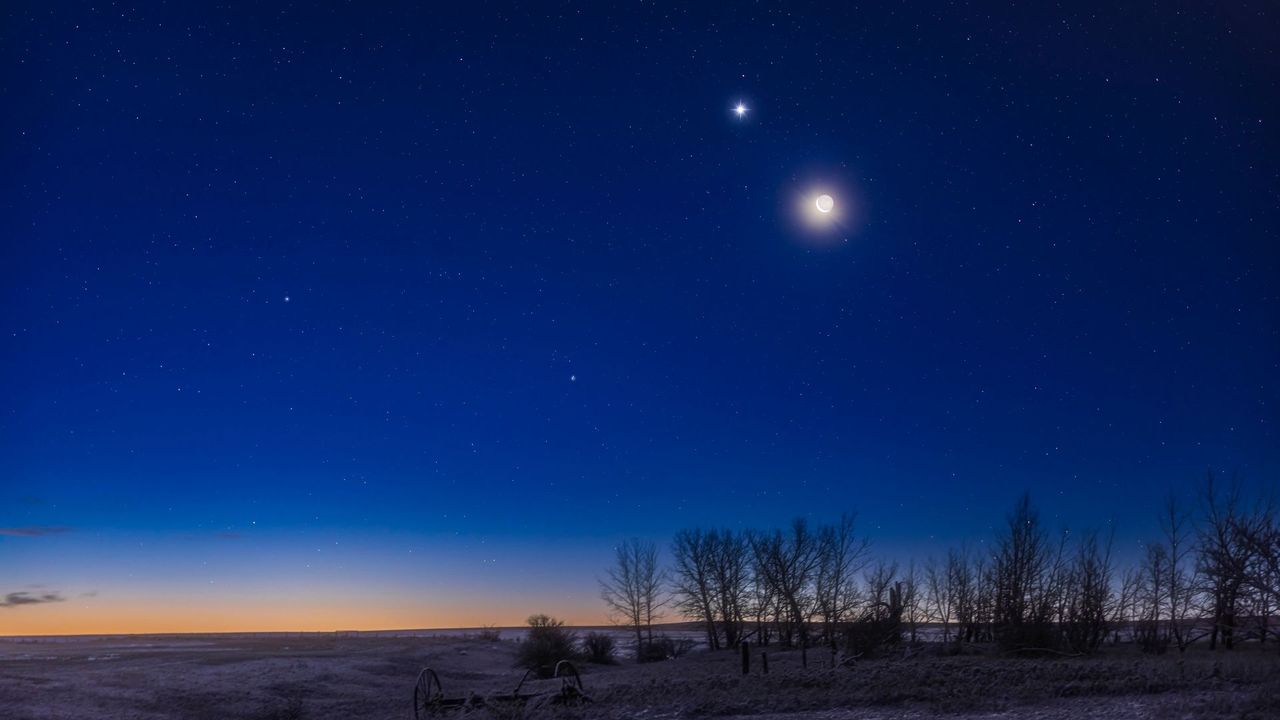
Look west sky after sunset on June 17 to witness a slender crescent moon gleaming alongside the stars of the Beehive Cluster at the head of a dazzling planetary parade. …
Look west sky after sunset on June 17 to witness a slender crescent moon gleaming alongside the stars of the Beehive Cluster at the head of a dazzling planetary parade. Mercury 's steady light will shine low on the western horizon in the glow of the setting sun, as while Jupiter glistens close to its upper left, with Venus and the moon lining up beyond to create a spectacular planetary display. You may notice the soft glow of earthshine infusing the night side of the moon on June 17, as light bounces off our planet to illuminate the lunar crescent while it glides silently through the 1,000-strong stellar population of the Beehive cluster. A pair of 10x50 binoculars will reveal dozens of the brilliant, young stars surrounding the three-day-old moon, while a 4-inch telescope will provide the magnification needed to highlight the cloud bands of Jupiter and its four large Galilean moons . Mercury will be the first of the parade members to slip from view, less than two hours after sunset, while the moon will remain visible for another hour after that for stargazers in the U.S., before it dips below the western horizon. The following night sees the waxing moon leave Venus and the Beehive Cluster behind, as it sweeps towards the blue-white light of Regulus — a multi-star system that glistens at the heart of the constellation Leo. …
Original source: Space.com
Mentioned
Leo · United States · Venus · Jupiter