Daily briefing: Lung microbiome linked to a mysterious tissue-scarring condition
Nature News ·
You have full access to this article via your institution. Hello Nature readers, would you like to get this Briefing in your inbox free every day? Sign up here . …
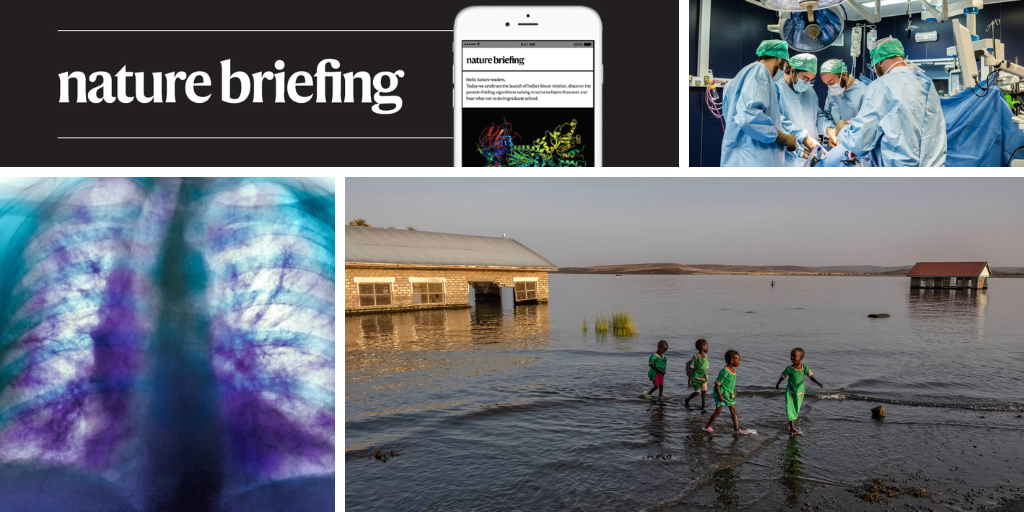
You have full access to this article via your institution. Hello Nature readers, would you like to get this Briefing in your inbox free every day? Sign up here . X-ray shows scarring in the lungs that occurs in people with idiopathic pulmonary fibrosis. Credit: SPL Researchers have identified a genetic link between the lung microbiome and a mysterious lung-scarring condition called idiopathic pulmonary fibrosis (IPF). The team found that mice with a mutation to a gene called toll-like receptor 5 ( Tlr5 ) are more susceptible to IPF than are mice without the mutation . This mutation results in a faulty copy of the TLR5 receptor, which is usually activated in response to lung injury and stops the overgrowth of harmful types of bacteria. A treatment that activated TLR5 prevented some fibrosis in a mouse model of IPF. Nature | 4 min read Reference: Science Translational Medicine paper A single dose of engineered immune cells has helped three people with ‘highly sensitized’ immune systems to receive life-saving kidney transplants. People in this group are often ineligible for transplants because their bodies usually reject the donated organ. Researchers engineered the recipient’s own immune cells into chimeric antigen receptor (CAR) T cells that ultimately reduce the trouble-making antibodies that push their immune systems into overdrive . More than a year after receiving the cells, the three people are now living with new kidneys and without notable side effects. …
Original source: Nature News
Mentioned
Quantum · Science · Microsoft · Donald Trump · United States · New England Journal of Medicine