The red state, blue state divide is real. But it's driven by more than just politics
NPR News ·
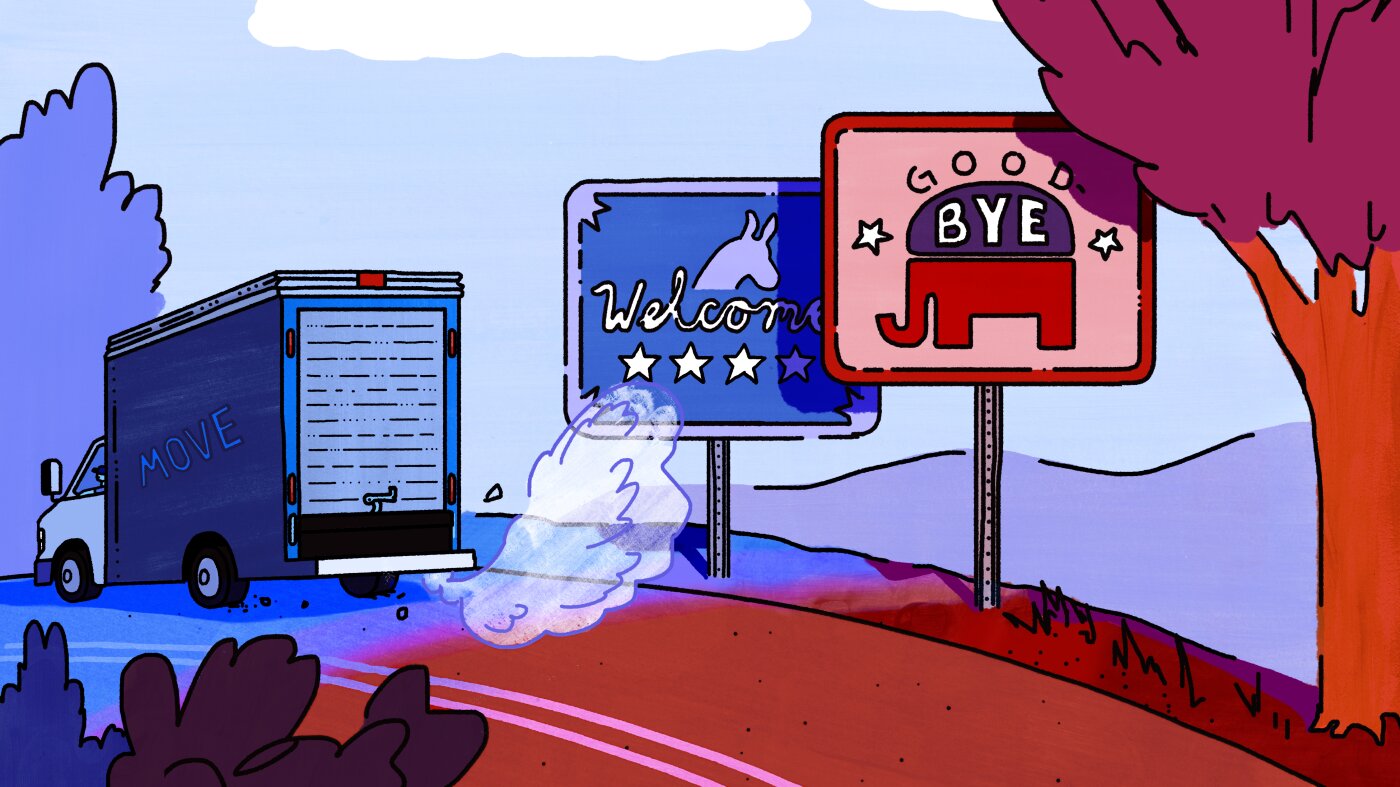
Illustration by Annelise Capossela for NPR Three years ago, Jessa Davis had an epiphany: After she came out as a trans woman, remaining in deep-red Texas felt untenable. …
Illustration by Annelise Capossela for NPR Three years ago, Jessa Davis had an epiphany: After she came out as a trans woman, remaining in deep-red Texas felt untenable. So, she sold her house in Odessa and moved to the liberal bastion of Seattle, Wash. Davis describes herself as a trans refugee. Back in Texas, she says, lived in a "pretty hostile and frankly dangerous" place. "I had a lot of close calls, a lot of threats." Davis volunteered with organizations advocating for trans and queer rights in Odessa and remembers thinking, "I've got one life and I don't want to spend the next 20 years of [it] fighting a battle that I'm not sure we're going to win in a place like Texas." Her fight for LGBTQ rights continues, but it feels more manageable in a city she views as welcoming and supportive. After arriving, Davis quickly became active in local issues and now serves as co-chair on a commission advising the city on LGBTQ issues. She and other commissioners have urged Seattle to declare a state of emergency to provide more resources for the growing number of people relocating there to escape anti-LGBTQ laws and hostile social climates elsewhere in the country. Jenna Davis in Seattle in a photo taken last month. Cadence Sagan hide caption toggle caption Cadence Sagan Davis' case reflects what sociologists call "ideological sorting" — the tendency to choose communities aligned with one's political and cultural values. …
Original source: NPR News