First precise genome editing of human embryos triggers praise and alarm
Nature News ·
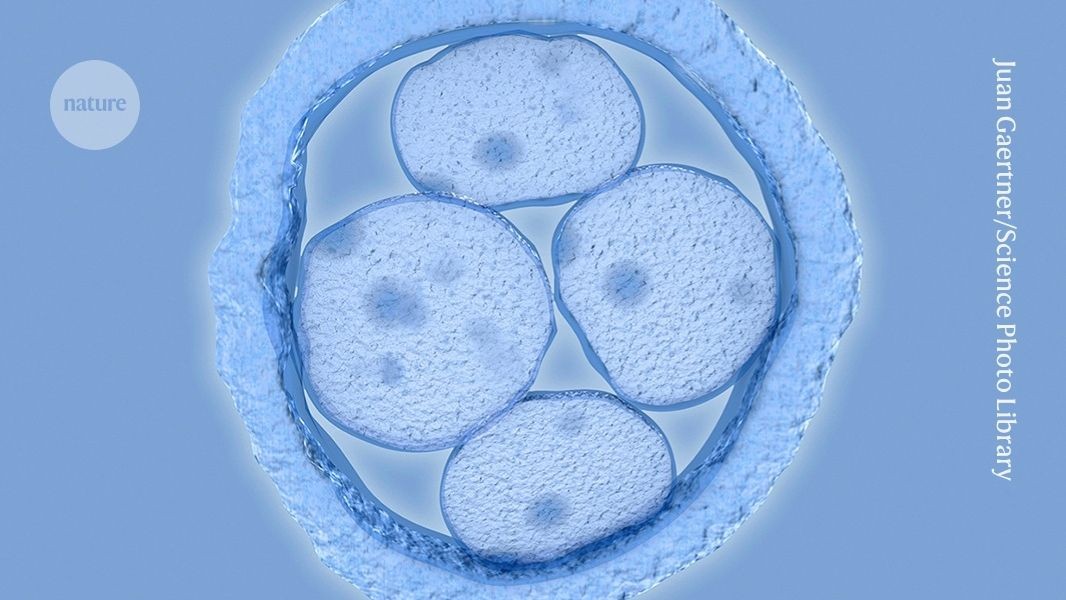
A four-celled human embryo. Credit: Juan Gaertner/Science Photo Library Researchers say they have used a precise genome-editing technique called base editing to alter the genome of human embryos for …
A four-celled human embryo. Credit: Juan Gaertner/Science Photo Library Researchers say they have used a precise genome-editing technique called base editing to alter the genome of human embryos for the first time. The announcement has prompted excitement and caution among scientists and bioethicists. Many say the work is an impressive step towards scientists being able to fix disease-causing mutations in embryos. But others worry the technology could be deployed to try to create embryos with traits such as superior intelligence. Dieter Egli, a developmental cell biologist at Columbia University in New York City and his colleagues posted their results on the bioRxiv preprint site on 1 June 1 . The study, which was first reported by The New York Times , has not yet been peer reviewed. ‘Biotech Barbie’ says the time has come to consider CRISPR babies. Do scientists agree? Previous studies had suggested that the use of a standard but less precise form of gene editing in embryos can cause the loss of the edited chromosomes — an effect that made the technology unusable in embryos. The new work is “a conceptual shift ... that really has the potential to move the field forward,” says Emre Seli, an obstetrician and gynaecologist at Yale University in New Haven, Connecticut. "This will go down in history in a positive way — less reckless, more careful and ethical than previous attempts,” says Greg Neely, a genomics researcher at the University of Sydney in Australia. …
Original source: Nature News
Mentioned
California · Connecticut · New York City · New York Times · Yale University · Stanford University · Columbia University · University of Sydney