‘Good lord, what a smell’: can Brazil’s biggest city save a vital source of water from sewage, bacteria and organised crime?
The Guardian Business ·
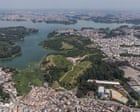
I n a small motorboat laden with water-monitoring equipment, biologist Marta Marcondes and community activist Wesley Silvestre Rosa cross Billings reservoir on the far southern edge of São Paulo. …
I n a small motorboat laden with water-monitoring equipment, biologist Marta Marcondes and community activist Wesley Silvestre Rosa cross Billings reservoir on the far southern edge of São Paulo. Bright white herons glide over the water, which is flanked by thick dark green clusters of Brazil ’s Atlantic forest, as the boat heads towards one of the more polluted parts of the reservoir. “We see where sewage is entering, we see what has been deforested and how that has affected the water quality of the reservoir,” Marcondes says. Marcondes and Rosa are dedicated to the upkeep of Billings, which at 127 sq km (49 sq miles) is Brazil’s largest urban reservoir by surface area and volume and a vital water source for the almost 22 million people who live in São Paulo’s metropolitan area. It also generates energy via a hydroelectric dam and plays a crucial role in flood control and irrigation; it provides a cooling effect during periods of extreme heat and people use its cleaner parts for recreation and fishing. Biologist Marta Marcondes collects water samples from the reservoir to monitor contamination levels. Photograph: Avener Prado/The Guardian Despite its importance, large areas of Billings are polluted: contaminated with household and industrial waste, pharmaceutical residues, microplastics and fecal matter. Urban planners blame neglect by local authorities, flawed water management policies and uncontrolled urban expansion. …
Original source: The Guardian Business