In a surprise launch, China debuts another big rocket designed for reusability
Ars Technica ·
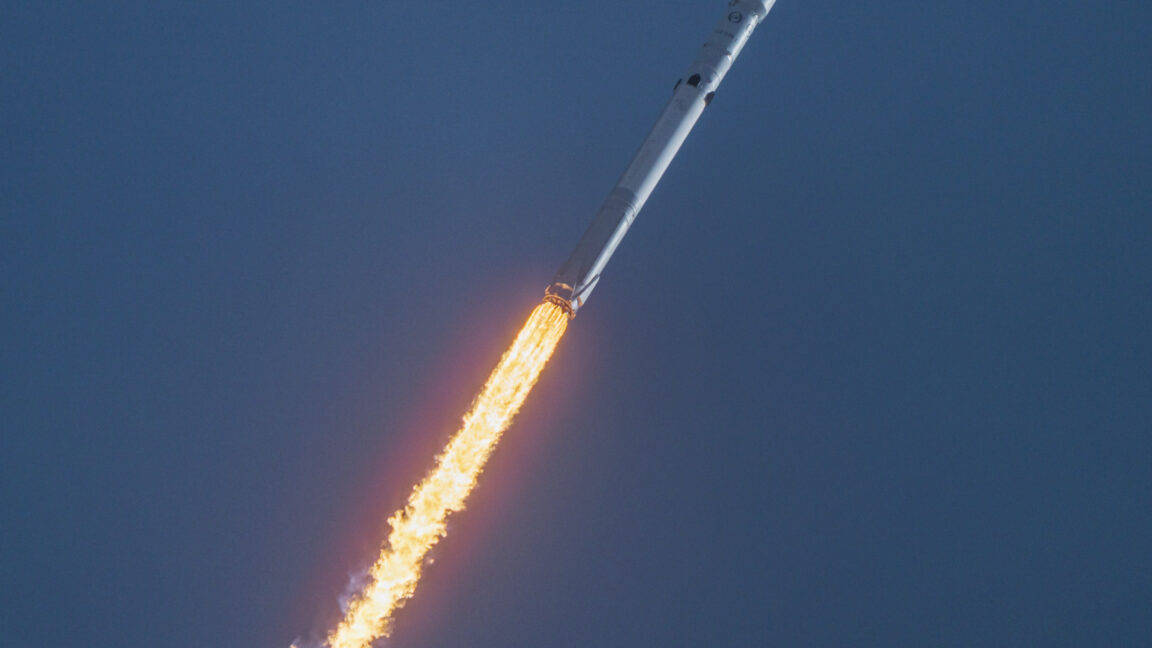
Monday’s launch did not include any attempt to land the first stage booster, but the rocket carried grid fins and landing legs, important hardware elements for future recovery experiments. …
Monday’s launch did not include any attempt to land the first stage booster, but the rocket carried grid fins and landing legs, important hardware elements for future recovery experiments. A statement released by China Aerospace Science and Technology Corporation (CASC), CACL’s parent company, declared the first flight of the Long March 12B a “complete success” in a post-launch statement. “This launch adds another high-capacity commercial rocket to [China’s] fleet for large-scale Internet constellation networking missions,” CASC said. “No recovery tests were conducted during this mission; however, first-stage recovery tests are scheduled to be carried out at a later, opportune time.” Satellites for one of these large-scale Internet constellations rode to space aboard the Long March 12B, which released a batch of Qianfan broadband spacecraft into low-Earth orbit. Qianfan is one of China’s two leading mega-constellations, each seeking to replicate for China what SpaceX’s Starlink does in the United States. Who’s involved? The Long March rocket family dates back to 1970, when China launched its first satellite into orbit using the Long March 1 vehicle derived from Chinese ballistic missiles. Many iterations have followed. The Long March 2, 3, and 4 rockets were China’s workhorses in the 1980s, 1990s, and 2000s. …
Original source: Ars Technica
Mentioned
Earth · China · Chinese · United States