Murder conviction sparks debate on ceremonial blades carried by some Sikhs
The Guardian World ·
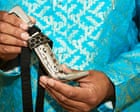
The conviction of Vickrum Digwa for the murder of 18-year-old Henry Nowak has sparked renewed discussion about kirpans, the ceremonial blades carried by some Sikhs as an article of faith. …
The conviction of Vickrum Digwa for the murder of 18-year-old Henry Nowak has sparked renewed discussion about kirpans, the ceremonial blades carried by some Sikhs as an article of faith. The prosecution told the jury at Southampton crown court that while Digwa was wearing a small kirpan under his clothing around his neck, which met his religious obligation, he also chose to carry the much larger knife. What is a kirpan? A kirpan is a ceremonial sword or dagger that is one of the five articles of faith for practising sikhs, known as the five k’s, because they all begin with the letter K in Punjabi. The other four are kesh: keeping uncut hair, which is maintained in a turban, kara, a round steel bracelet; kanga, a small wooden comb; and kachhera, cotton shorts. The word kirpan comes from two words: kirpa , meaning grace, and aan , meaning defence. Kirpans are typically worn close to the body and are often small, with a curved blade. Sikh organisations describe the kirpan as an article of faith that symbolises dignity and a duty to stand against injustice and protect the vulnerable. What does the law say? Under UK law it is lawful for a person to possess a kirpan for religious, ceremonial, sporting or historical reasons. But, like any bladed article, a kirpan can become an offensive weapon if it is used unlawfully. The government says it is up to a court to decide if a person has got a good reason to carry a knife or a weapon if they are charged with carrying it illegally. …
Original source: The Guardian World
Mentioned
Hampshire · Southampton · Henry Nowak · Nigel Farage · Keir Starmer · Shabana Mahmood