How England’s largest forest went from commodity to conservation haven
The Guardian Business ·
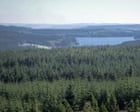
D riving through part of Northumberland , you might look around at the tall Sitka spruce and imagine yourself in Canada’s evergreen forests, or perhaps, on a sunny day, in northern California. …
D riving through part of Northumberland , you might look around at the tall Sitka spruce and imagine yourself in Canada’s evergreen forests, or perhaps, on a sunny day, in northern California. Instead, you are in England’s largest forest, Kielder, often heralded as a success story that balances commercial production with ambitious conservation. The first trees of this 60,000-hectare forest were planted 100 years ago with one aim: increasing Britain’s timber reserves. Much has changed since then. From a single-use plantation, Kielder Forest has been transformed into a haven for nature and an invaluable environmental asset. In the spring of 1926, the newly created Forestry Commission was tasked with solving a security issue that had emerged during the first world war: with Britain’s woodland cover at a record low of 5%, and timber an essential building resource, the UK needed more trees. And so hours of physical labour were poured into planting, with thousands of unemployed ex-servicemen put to work. Eventually, 250 square miles of tree cover were planted. From the 1960s, people began to realise the forest could serve purposes other than timber production and could be a valuable location for carbon storage and wildlife habitats. This was the beginning of Kielder’s transition to a mixed-use venture no longer about maximising the commercial value of each inch of land. …
Original source: The Guardian Business