Better diagnostics could have limited this Ebola outbreak
Nature News ·
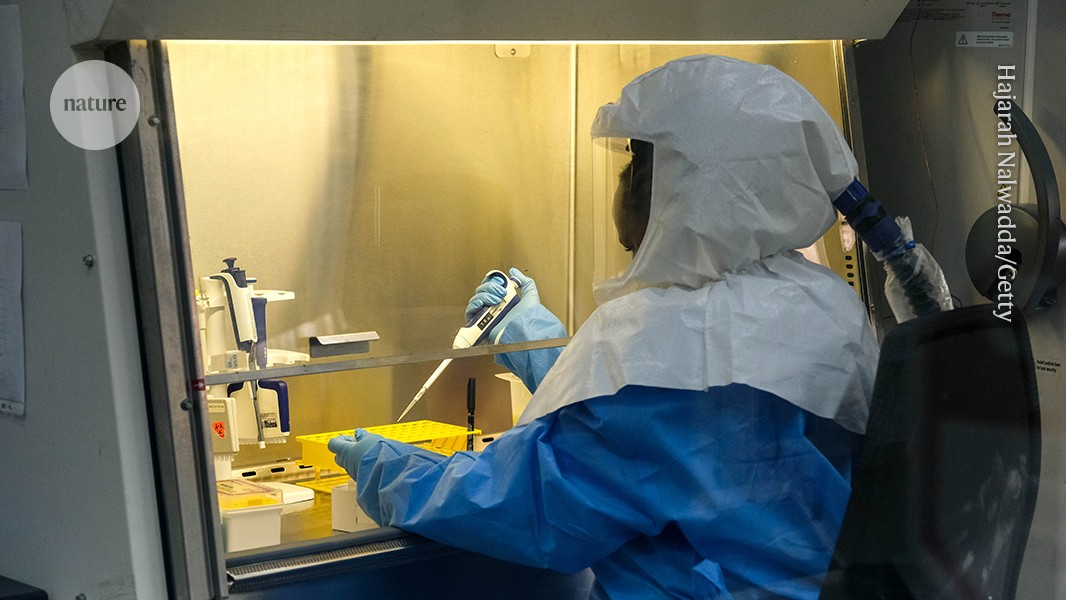
A technologist processes Ebola samples in a virus-surveillance laboratory in Uganda. Credit: Hajarah Nalwadda/Getty Just six years after the COVID-19 pandemic, the world seems to be moving away from …
A technologist processes Ebola samples in a virus-surveillance laboratory in Uganda. Credit: Hajarah Nalwadda/Getty Just six years after the COVID-19 pandemic, the world seems to be moving away from pandemic preparedness, rather than towards it. A surge in Ebola cases in the eastern Democratic Republic of the Congo (DRC) illustrates this clearly. The DRC is no stranger to Ebola but, weeks after the latest outbreak in its Ituri province was declared on 15 May, the country is struggling to contain the disease: more than 850 cases have now been reported. Ebola outbreak spirals out of control: how might it have started? Diseases are likely to emerge in regions such as Ituri that are weakened by overlapping crises, political instability and health insecurity, and with fragile health-care infrastructure, workforce shortages, widespread health misinformation and limited laboratory capacity. But there is no excuse for being unprepared this time. The DRC has a long history of containing Ebola by isolating people with the disease and tracing and quarantining their contacts ( D. Mukadi-Bamuleka et al. Emerg. Infect. Dis. 29 , 1–9; 2023 ). A variety of diagnostic tools , therapeutics and vaccines has become available since the 2014–16 Ebola outbreak in West Africa, when international funding for research and development was increased. Nevertheless, the country’s health-care professionals were caught off guard. …
Original source: Nature News
Mentioned
Kinshasa · COVID-19 · California · West Africa · World Health Organization