Rocket goes boom, satellite cameras zoom: Explosive Blue Origin damage is visible from space
Space.com ·
The dust has settled in the aftermath of last week's giant New Glenn rocket explosion, which shook Florida's Space Coast and the space industry itself. …
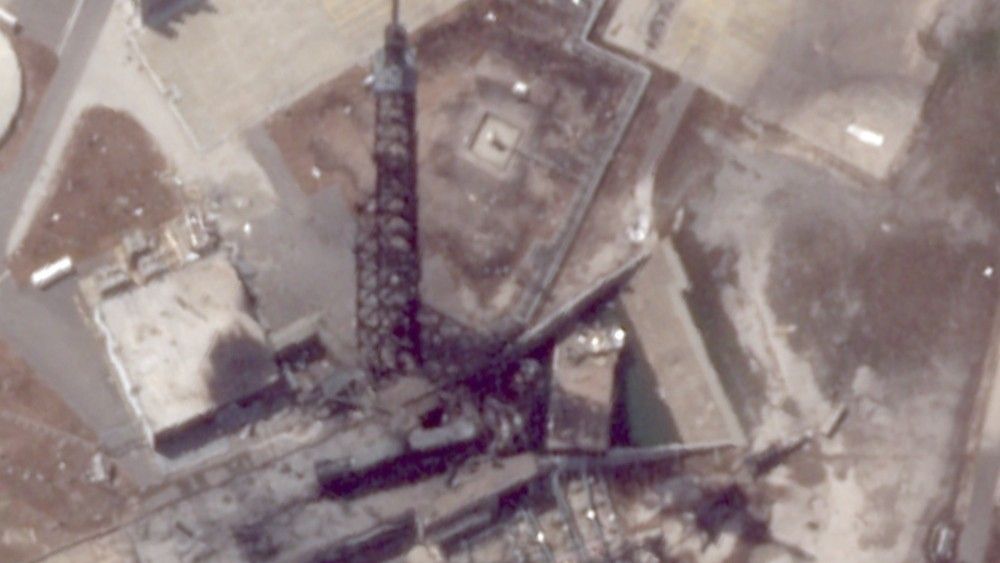
The dust has settled in the aftermath of last week's giant New Glenn rocket explosion, which shook Florida's Space Coast and the space industry itself. Blue Origin was conducting a fueling test on May 28, ahead of New Glenn's fourth mission, when a yet unknown event led to the total destruction of the vehicle and significant damage to the ground infrastructure at Launch Complex-36 (LC-36). No one was hurt in the incident, but the loss dealt a serious blow to Blue Origin's ability to meet NASA's timeline to support the Artemis missions to return astronauts to the moon , and further stalls the growth of the Amazon Leo wireless internet constellation meant to compete against SpaceX's Starlink satellite network. The explosion caused extensive damage to LC-36, Blue Origin's only launchpad capable of supporting a rocket as large as New Glenn . So extensive, in fact, that the damage can be measured from space , as seen in images captured by Planet Lab's SkySat-C9 satellite, and processed by Spacefromspace . Satellite imagery shows charred vegetation stretched out in nearly every direction around the half-mile-wide (1 kilometer) New Glenn pad. Blue Origin leases LC-36, which is located at Cape Canaveral Space Force Station (CCSFS). Visible damage across the scorched facility, now in ruin, can be seen on the launch tower, flame trench and other support systems. Blue Origin is currently working out how to repair the damage. …
Original source: Space.com
Mentioned
Isaacman · Starlink · Blue Moon · Jeff Bezos · Jared Isaacman · Cape Canaveral Space Force Station